Published Oct 29, 2026

Beyond the machine: How Metso is reimagining aggregate production via digital intelligence

Predictive maintenance, performance-enhancing software, AI-powered workflows and connected customer experiences are rapidly moving from industry buzzwords to operational reality. For Metso, the launch of the enhanced Digital Services portfolio represents not simply a new product offering, but a fundamental shift in how aggregates equipment is operated, serviced and optimized. Jaakko Huhtapelto, Metso’s Vice President of Technology and Digital Business, Aggregates, shares Metso's digital vision, customer adoption and what the quarry of the future might look like.
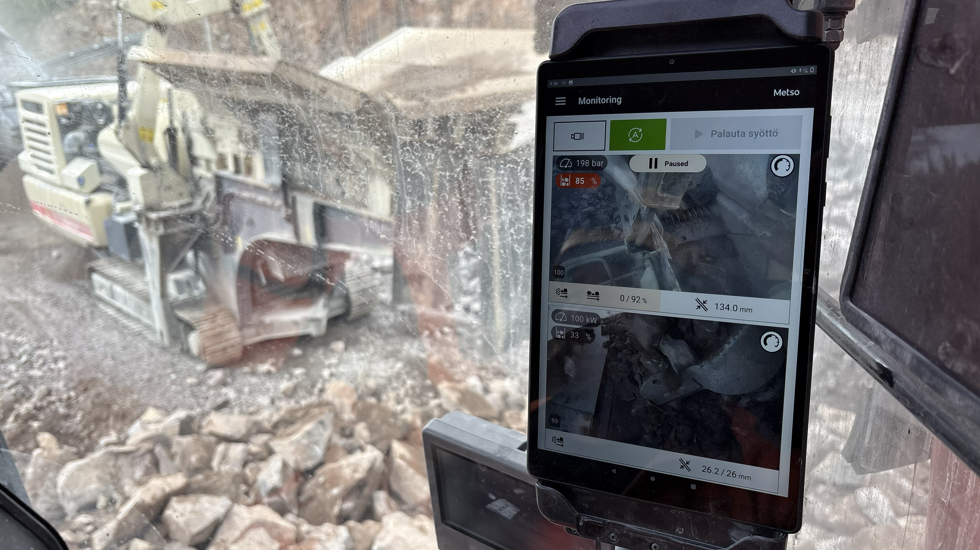
A Metso Remote IC camera in action

This article was first published on Aggregates Business in October 2026.


For decades, the aggregates industry has relied on a familiar formula for improving productivity: bigger machines, more powerful components and continual hardware innovation. Yet, according to Jaakko Huhtapelto, Metso’s latest advances show that some of the industry’s biggest performance gains may now come from software rather than steel.

Unveiled to the global market at CONEXPO-CON/AGG in Las Vegas, USA (3-7 March 2026), Metso’s enhanced Digital Services portfolio centres around three key themes: maximizing uptime, increasing equipment performance and simplifying the customer experience.

At the heart of the strategy is a simple principle.

“The north star for us has been focusing on the customer’s biggest challenges,” says Huhtapelto.

Those challenges rarely change. Quarry operators want their equipment running reliably, producing as much saleable material as possible and requiring as little administrative effort as possible. Metso’s digital roadmap has therefore been built around solving precisely those issues.

Jaakko Huhtapelto
Jaakko Huhtapelto, Metso’s vice president of Technology and Digital Business, Aggregates

The ‘holy grail’ of predictive maintenance

One of the most significant additions to the portfolio is Metso’s predictive maintenance capability, launched at CONEXPO/CON-AGG 2026.

For original equipment manufacturers, predicting failures before they happen has long been regarded as the industry’s holy grail. Traditional maintenance models are largely reactive. Operators detect a problem, contact their supplier and then organize repairs, often after productivity has already been affected.

Predictive maintenance seeks to reverse that process.

Instead of waiting for customers to report issues, Metso analyses equipment data and identifies potential failures before they become operational problems. Metso then delivers recommendations through service network and distribution partners, enabling preventative action before costly downtime occurs. 

"Being proactive or even preventative and predictive is life and death to our customers who want to keep operating,” Huhtapelto explains.

Importantly, Metso views predictive maintenance not as a standalone technology but as a catalyst for transforming service relationships.

The system enables Metso and its distributors to approach customers with targeted recommendations rather than waiting for support requests. This shift from reactive support to proactive service requires changes in both OEM (original equipment manufacturer) and distributor mindsets, but Huhtapelto believes it represents the future of customer support.

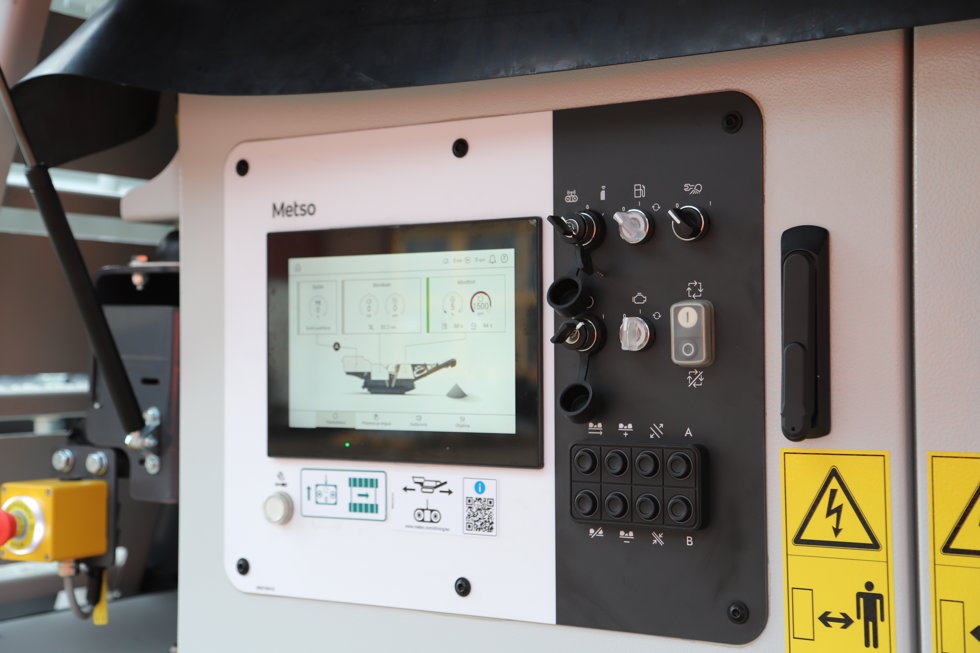
Metso ICX automation system
The Metso ICX automation system

The longer-term potential extends beyond maintenance recommendations alone. By understanding when components are likely to require replacement, Metso can also optimize inventory planning throughout its service network, helping ensure critical parts are available when customers need them.

“It’s not only about understanding when something is about to break,” he says. “That information can be leveraged to make inventory decisions across our network.”


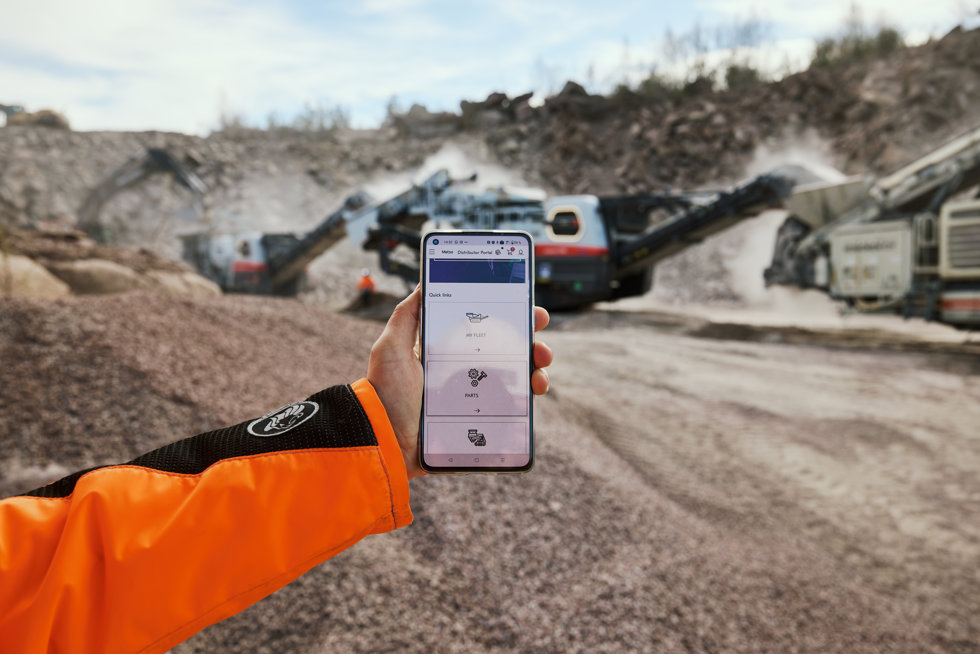
my.metso.com, Metso’s distributor facing portal, on a smartphone.

Unlocking double-digit productivity gains

While predictive maintenance helps protect uptime, Metso’s performance technologies focus directly on production output.

Among the most talked-about innovations are Adaptive Feed Control and Remote IC, technologies that optimize crushing and screening operations through advanced automation and monitoring.

The headline number has attracted considerable attention.

According to Huhtapelto, pilot customers recorded production improvements of up to 10% and 15%.

In an industry where even modest efficiency gains can generate significant profitability improvements, the quoted figures are impressive.

“If we compare what type of improvements we would have needed to make for a physical crusher to give 10 to 15% more throughput, it would be a breakthrough. And this is what we do only with software.”
Metso has enhanced its Digital Services portfolio.

Adaptive Feed Control (AFC) delivers the productivity gains by automatically adjusting the mobile crusher’s feeder speed, keeping the crushing process stable and the crusher cavity at an optimal level at all times.

Remote IC provides monitoring, visibility and operational control, while also creating opportunities to optimize entire crushing trains rather than individual machines in isolation.

The greatest value, Huhtapelto notes, comes when equipment is connected and managed as a complete system.

Rather than treating each crusher as a standalone asset, the technology can optimize performance across the entire train, identify bottlenecks and dynamically adjust operation to maximize throughput.

For quarry operators facing margin pressures, workforce shortages and rising operating costs, the business case can be compelling.

Metso’s early adoption programme supports that view. 

Perhaps the most revealing statistic is not the initial interest, but what happens after customers experience the technology for themselves. 

“The customers that try it almost 100% convert into buying,” says Huhtapelto. “They understand it. They see the difference.”

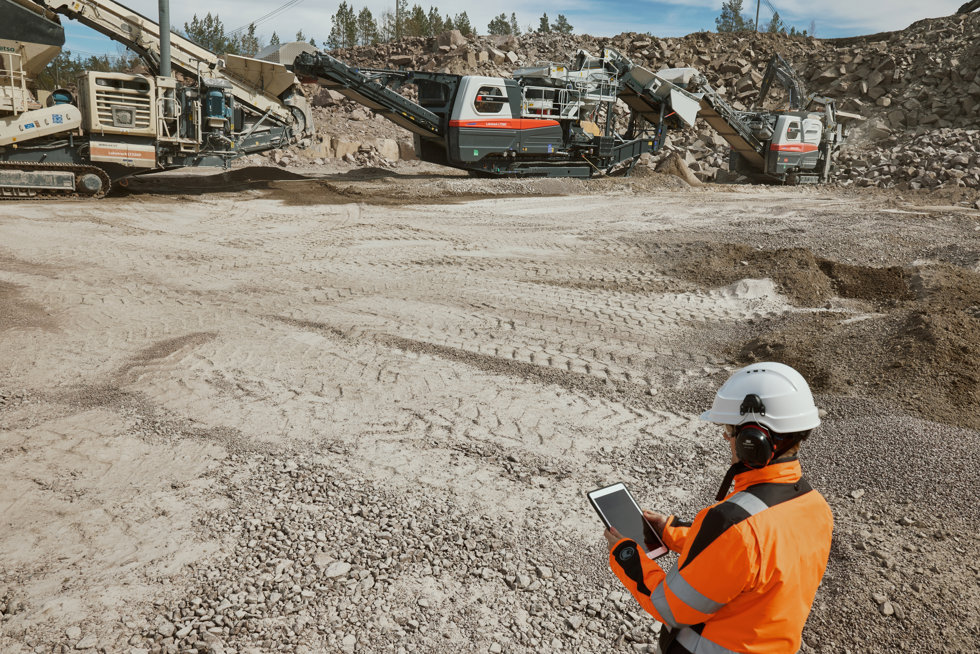
A Metso Lokotrack plant train: the LT400J, LT350C, and LT330D

Changing the industry’s mindset

Despite growing digitalization across construction and mining, aggregates remains a traditionally conservative industry, where proven technologies often outperform untested innovation in purchasing decisions.

Huhtapelto readily acknowledges that challenge. 

“Not all want to jump in immediately,” he says with a smile. 

However, he believes digital adoption is less dependent on geography than many assume. While some regions are naturally more progressive than others, every market contains both innovators and traditionalists.

Metso therefore avoids broad-brush marketing campaigns in favour of targeted engagement.

Using operational data already available through connected equipment, Metso approaches selected customers with evidence-based recommendations showing where improvements may be possible.

“It’s a bit of a different approach,” says Huhtapelto. “Instead of having a megaphone, we’re having a targeted customer approach.”

This data-driven targeting reflects the wider philosophy behind Metso’s digital strategy: helping customers extract greater value from assets they already own.

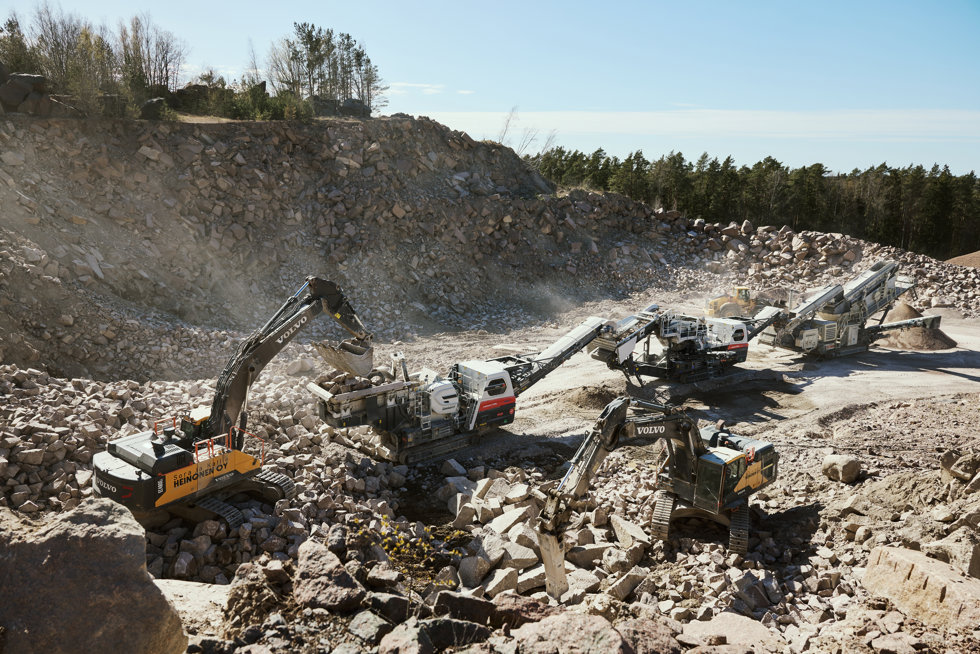
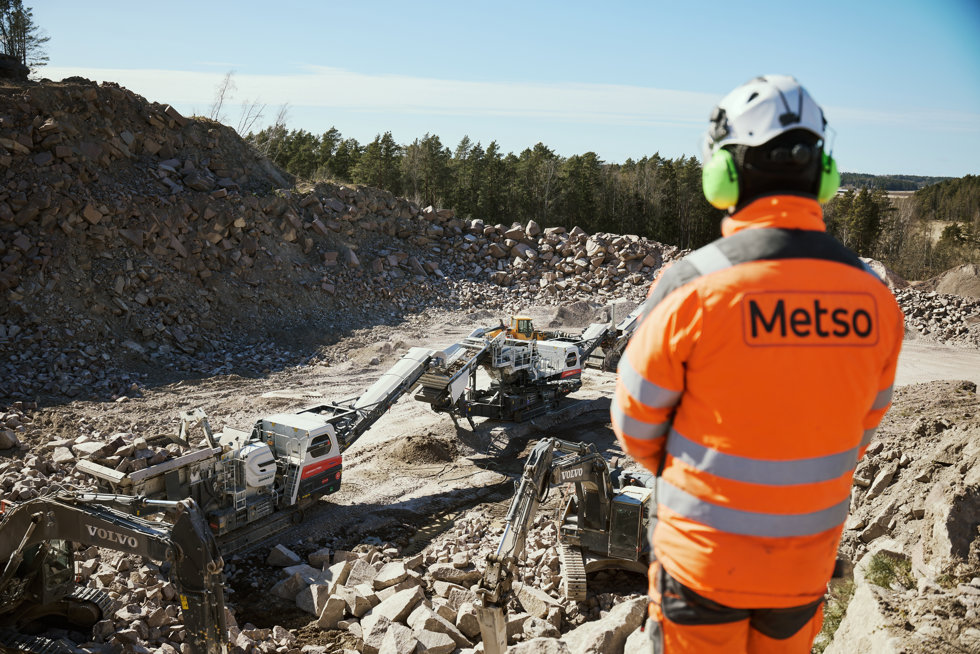
Crushing rock with Metso Lokotrack plant

Sustainability through optimization

As sustainability requirements grow in public and private sector procurement, quarry operators face increasing pressure to demonstrate measurable environmental improvements.

Huhtapelto views digitalization’s sustainability benefits through a practical operational lens.

The logic is straightforward.

If operators can increase production by up to 15% without purchasing additional primary equipment, resource efficiency automatically improves.

“You are essentially producing more with less,” he explains.

Similarly, predictive maintenance can extend component life, reduce catastrophic failures and minimize the environmental burden associated with major equipment repairs or replacements.

Currently, however, Metso sees an opportunity to help customers better quantify and communicate these sustainability benefits.

Future development is likely to focus increasingly on transparency and reporting, providing customers with data that can support tender submissions, ESG (Environmental, Social, and Governance) reporting and sustainability performance measurement.

“How can we better help our customers articulate the sustainability numbers to their customers?” Huhtapelto asks. “That’s the next wave.”

AI arrives on the quarry floor

Perhaps the most intriguing aspect of Metso’s digital journey is the growing role of artificial intelligence.

While much attention has focused on future possibilities, Huhtapelto points out that AI-powered workflows already operate behind the scenes.

Predictive maintenance recommendations, for example, rely on multiple layers of contextual analysis.

The system evaluates customer histories, machine serial numbers, asset configurations and bill-of-materials data before generating tailored recommendations for individual machines.

In effect, intelligent digital agents are already helping interpret complex operational information and convert it into practical maintenance actions.

Looking ahead, Huhtapelto anticipates even deeper integration between customer and supplier systems.

In the future, quarry operators may deploy their own AI agents to manage maintenance planning and operational optimization. Those agents could interact directly with Metso’s systems, exchanging information and coordinating actions with minimal human intervention.

“The agent is then the one that is using our service,” he says.

While the industry has not yet reached that level of sophistication, Huhtapelto believes it represents a realistic direction of travel.

Far from eliminating human involvement, however, he expects AI to elevate operators into higher-value roles.

Instead of manually searching parts catalogues or adjusting equipment settings, operators will increasingly evaluate recommendations generated by intelligent systems and make strategic decisions based on richer data.

“They will become observers making these high-quality decisions,” he says.

Addressing workforce and safety challenges

The industry’s persistent skills shortage is another powerful driver behind digital transformation.

Across global aggregates markets, operators continue to report challenges attracting and retaining skilled personnel.

Huhtapelto believes technology can help make the sector more attractive to future workers by eliminating repetitive tasks and creating more technologically sophisticated roles.

Equally important are the health and safety advantages.

Remote operation capabilities already let operators control equipment from excavator cabs rather than requiring workers to move repeatedly around active production areas.

The benefits can be particularly valuable in harsh operating environments.

As Huhtapelto jokes, few people relish leaving a warm excavator cab during a Finnish winter to make routine adjustments beside a crusher.

Yet even as automation expands, he is realistic about the physical realities of quarry operations.

Some tasks will always require human intervention.

“Someone still needs to make the liner change,” he says.

The objective, therefore, is not to eliminate people from sites, but to make inherently necessary tasks safer and better informed.
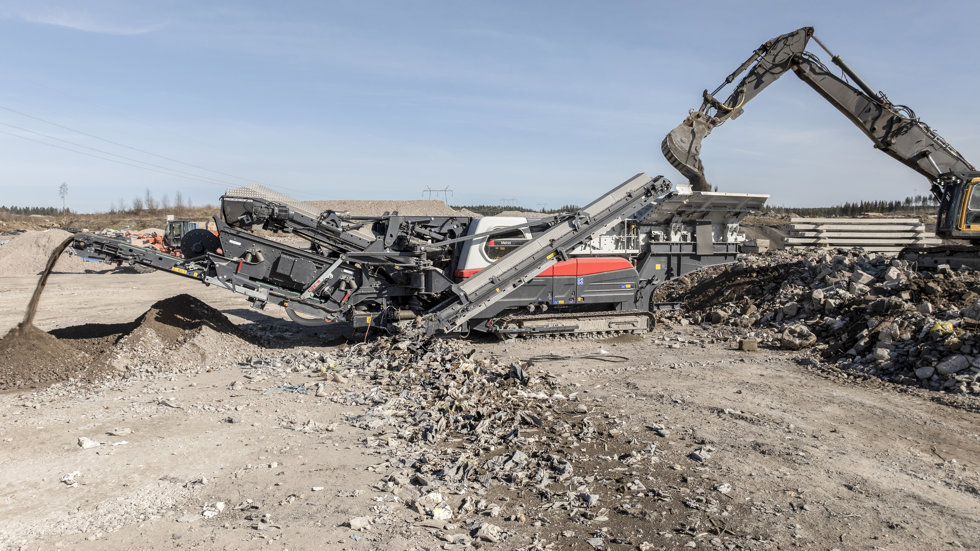
A Metso Lokotrack LT400RS recycling concrete waste.
The future of aggregates production will not be defined by machines alone, but by the intelligence that connects them.

Building the future in Tampere

Behind Metso’s digital transformation sits a substantial internal commitment to technology development.

Unlike some manufacturers that rely heavily on external partners, Huhtapelto emphasises that digital capabilities are strategically important and must be owned internally.

“We want to be in the driver’s seat,” he says.

The technologies underpinning the Digital Services portfolio have largely been developed in-house, supported by selected technology and implementation partners.

Importantly, Metso no longer treats digitalization as a finite R&D project.

Instead, development operates as a continuous cycle of improvement, refinement and enhancement.

That philosophy aligns closely with the company’s major investment in its new technology centre in Tampere, Finland.

For Huhtapelto, proximity matters.

Keeping software developers, test engineers, and production personnel physically close together accelerates innovation and keeps new ideas grounded in operational reality.

Being able to walk directly from a development office to a testing facility provides immediate feedback, shortens development cycles and helps maintain focus on practical customer value.

“It’s much faster when you can walk down to the test facility and see how it goes,” he says.

When digital simply becomes part of the product

Looking ahead, Huhtapelto believes the term ‘digital services’ may eventually disappear altogether.

Just as touchscreen technology evolved from novelty to expectation in the smartphone world, digital intelligence will become a standard component of aggregate equipment.

Customers will no longer differentiate between digital and physical products because the two will become inseparable.

“The equipment will become more intelligent,” he says. “Over time they will converge.”

For Metso, staying relevant means embedding intelligence, automation, and data-driven optimisation at every stage of the customer journey.

The quarry of 2036 will still feature crushers, screens, liners and service technicians. People will remain essential. Physical operations will continue.

What will change is how decisions are made.

Operators will increasingly act as informed decisionmakers rather than manual controllers. AI systems will help manage complexity. Equipment will continuously communicate its condition. Maintenance activities will become more predictive than reactive. And data will flow seamlessly across operations, service networks and supply chains.

The transformation may be gradual, but Huhtapelto is convinced it is inevitable.

The future of aggregates production, he suggests, will not be defined by machines alone, but by the intelligence that connects them.

Enjoyed this article? Try this next
Sora ja Kallio Heinonen runs its crushing process with Remote IC and Adaptive Feed Control
See how AFC keeps feed steady and increases throughput.
Read more