Unplanned downtime in screening and mineral processing operations rarely occurs without warning. Changes in vibration, temperature and machine motion often provide early indications of developing issues. Without continuous monitoring or frequent inspections, however, these signals may go unnoticed, increasing the risk of unexpected failures and production disruptions.
Published Sep 7, 2026
5 real-world failures that condition monitoring can prevent in screening operations

Metso’s Data-driven Condition Monitoring Services combine advanced analytics, remote monitoring capabilities, and OEM expertise to help customers identify emerging issues early, improve maintenance planning, and support more reliable operations.
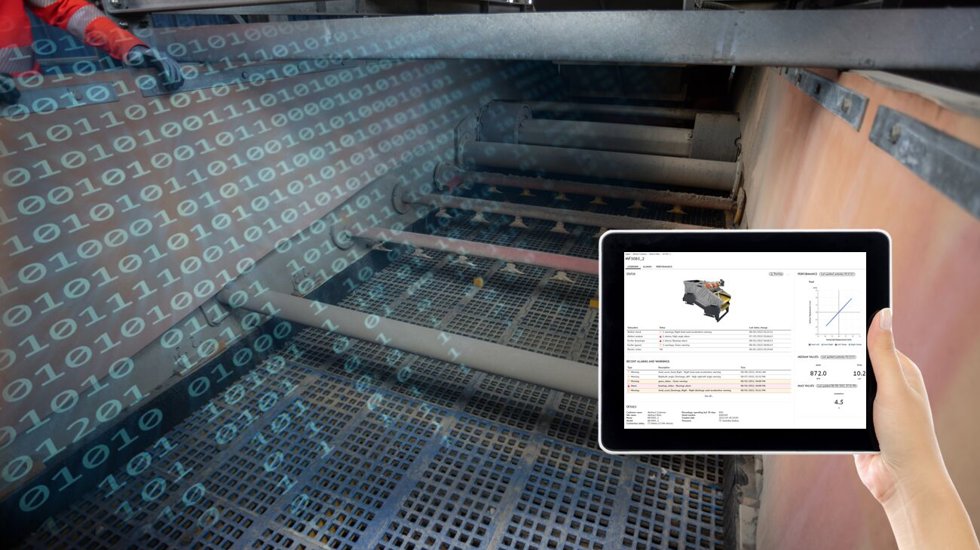
Advances in condition monitoring now allow operators to identify abnormal equipment behaviour early, enabling planned interventions that protect production, equipment integrity and safety. Drawing on real-world screening applications, here are five common failures condition monitoring can help prevent.
1. Bearing failures in exciters and screen mechanisms: Rising vibration levels and increasing bearing temperatures are common indicators of bearing degradation. Across a range of screening applications, early detection of these trends allowed exciters and mechanisms to be replaced during planned maintenance windows rather than failing unexpectedly. By identifying end-of-life conditions early, operators gained valuable time to align maintenance with production schedules and avoid extended downtime.
2. Lubrication-related motor failures: Lack of lubrication in electric motors often develops gradually and may not trigger immediate alarms. However, vibration spectrum analysis can reveal characteristic patterns associated with lubrication deficiency. In one instance, early detection of a missed motor regreasing enabled corrective lubrication that required only a short intervention, avoiding a potential motor or bearing failure that would have led to significantly longer downtime and higher maintenance costs.
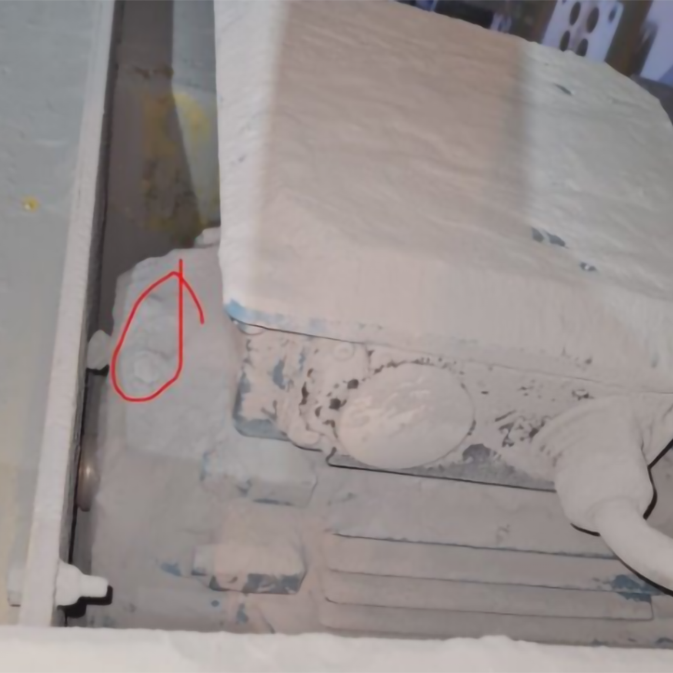
Case: Electric motor lubrication deficiency detected
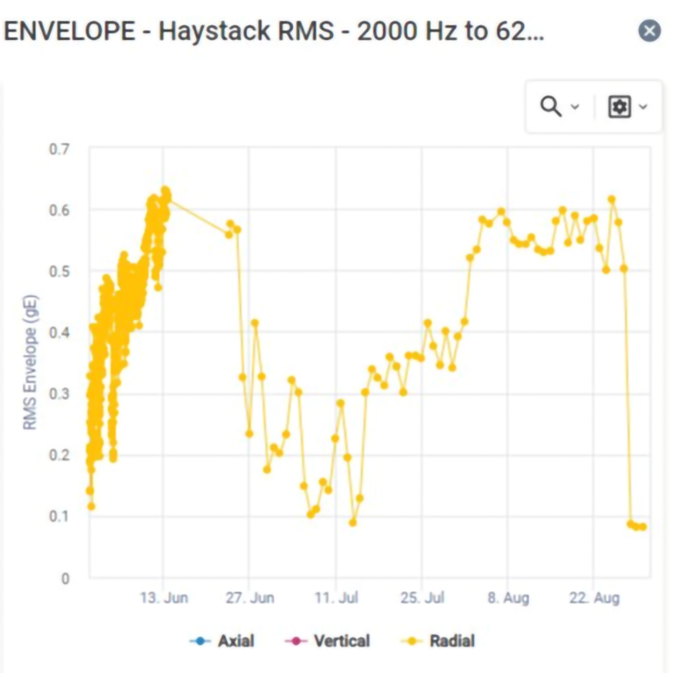
3. Structural damage from uneven screen loading: Uneven feed conditions can cause asymmetric loading across screen decks, leading to twisting, elevated structural stress, and reduced screening efficiency. A condition monitoring system detected abnormal motion patterns linked to poor feed distribution, allowing feed chute modifications to be implemented before structural damage occurred. Correcting feed conditions also improved long-term screen performance and reliability.
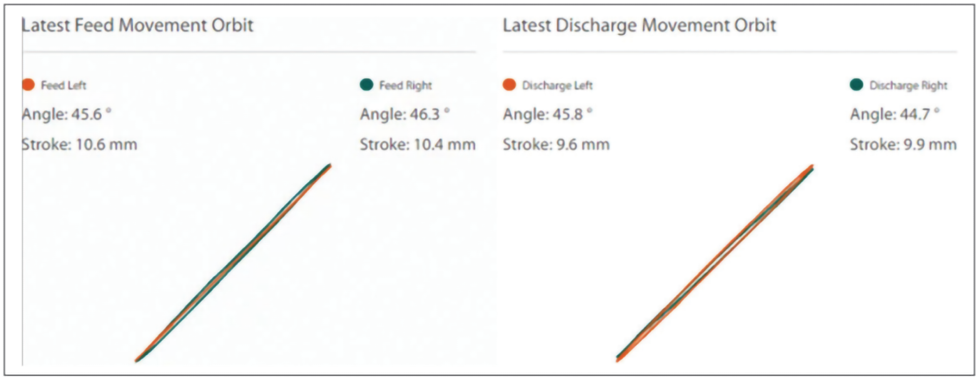
4. Mechanical stress from incorrect screen setup: Incorrect counterweight settings or excessive stroke levels can introduce unnecessary dynamic stress across vibrating screen components. In several cases, condition monitoring identified stroke and acceleration values operating outside recommended limits. Timely adjustments ensured screens operated within design tolerances, protecting equipment life and reducing the risk of unplanned shutdowns.
Case: material build-up around isolation frame springs detected
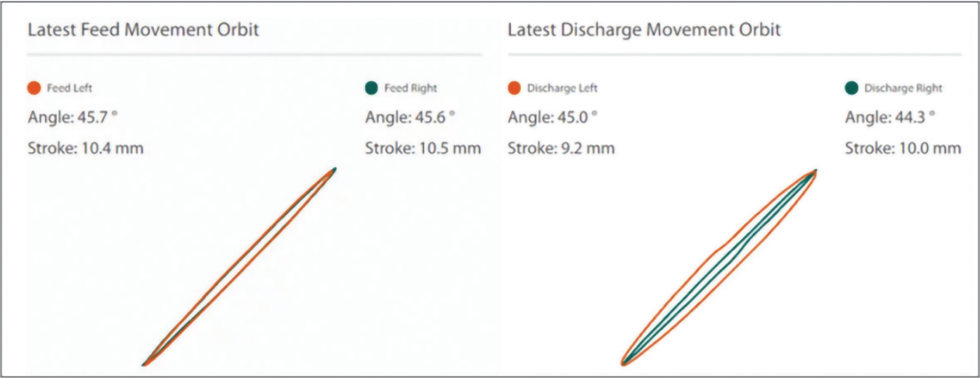
Before – showing irregular orbit
After
5. Operational issues caused by material build-up around isolation frames: Material build-up around isolation frames can restrict screen movement, alter operating motion, and increase stress on critical components. In one application, condition monitoring detected irregular orbital motion patterns that indicated abnormal operating conditions. Based on the data, site personnel were alerted to inspect the equipment and discovered material accumulation around the springs. Removing the build-up restored normal operation and prevented the issue from escalating into structural or exciter damage. This example highlights how condition monitoring can identify operational issues remotely, enabling proactive intervention before reliability, performance, or asset life are affected.
From reactive maintenance to predictive reliability
These real-world examples demonstrate how condition monitoring transforms maintenance strategies. By shifting the focus from reactive repairs to predictive insights based on actual equipment behaviour, operators can identify emerging faults, optimise equipment performance, and intervene before issues escalate into costly failures.
Modern condition monitoring combines high-resolution sensor data, secure digital connectivity, visual analytics, and OEM expertise to provide actionable insights from anywhere. This allows maintenance and operations teams to detect both equipment faults and process-related issues early, improving reliability, reducing unplanned downtime, and extending asset life.
For many maintenance teams, condition monitoring has become an essential tool for improving reliability, optimising asset performance, and avoiding costly disruptions. Demand for data-driven condition monitoring solutions is growing, with sites seeking earlier visibility into developing issues across screening, crushing, grinding, and other critical process areas.
Metso’s Data-driven Condition Monitoring Services combine advanced analytics, remote monitoring capabilities, and OEM expertise to help customers identify emerging issues early, improve maintenance planning, and support more reliable operations.
Read more

Your information is safe. Check our privacy notice for more details.
Thank you!
We will shortly contact you. You can send a new inquiry again after 15 minutes.