Mining
Nov 10, 2025

Bridging the mining skills gap - how Metso Academy is shaping the future of workforce development

Nichole Pritchard
Nichole Pritchard
Director, Commercial & Sales Enablement, Metso Academy
Mining companies are rethinking how they attract, train, and retain talent. Increasingly, they’re turning to structured career development and strategic partnerships to build a more resilient workforce. At the forefront of this shift is Metso Academy, which is helping customers move beyond one-off training sessions to comprehensive learning journeys that empower workers, improves operational performance, and secures operational continuity.
Image 6

This article was published in Materia magazine in December 2025.

The mining industry is at a pivotal moment. As experienced workers retire and fewer young professionals enter the field, mine sites around the world are grappling with a growing skills gap. This shortage of skilled labor is not just a workforce issue — it’s a business risk that affects safety, productivity, and profitability.

In response, many mining companies are rethinking how they attract, train, and retain talent. Increasingly, they’re turning to structured career development and strategic partnerships to build a more resilient workforce. At the forefront of this shift is Metso Academy, which is helping customers move beyond one-off training sessions to comprehensive learning journeys that empower workers, improves operational performance, and secures operational continuity.

The knowledge gap: a generational challenge

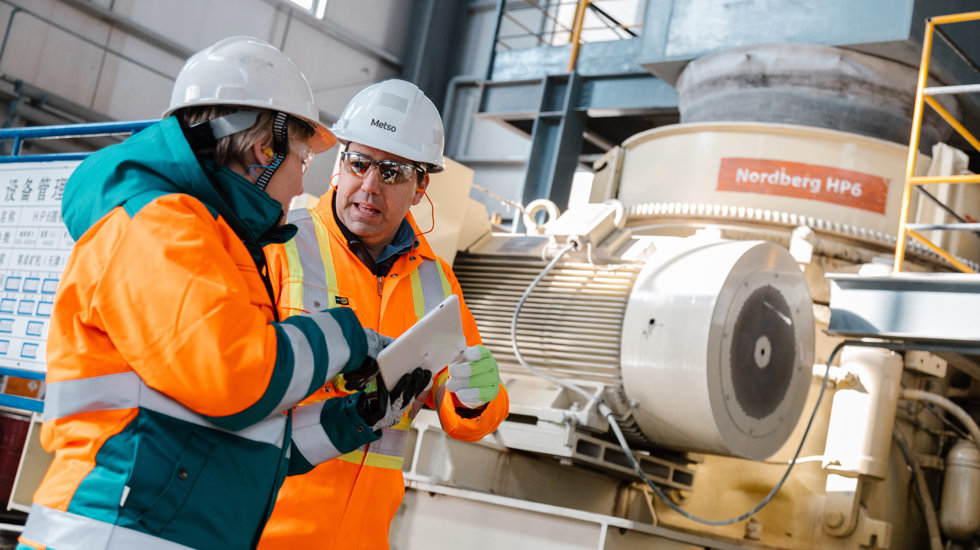
The mining sector is facing a demographic cliff. As baby boomers retire, they take with them decades of hands-on knowledge that hasn’t always been passed down. Nichole Pritchard, Director of Commercial and Sales Enablement at Metso Academy, explains that this has created a confidence gap among younger workers, who may not have had the opportunity to gain knowledge from more experienced personnel.

“Many technicians leave for just a small increase in hourly pay, because they don’t see a future,” she says. “But if you create a true career path — if they can see how their learning journey helps them grow — then there’s more reason to stay than just money.”

This lack of continuity has made it harder for mines to maintain consistent performance. Without a clear path for skill development, workers often feel stuck or underprepared. That’s why more companies are interested in investing in structured training programs that offer both foundational knowledge and opportunities for advancement.

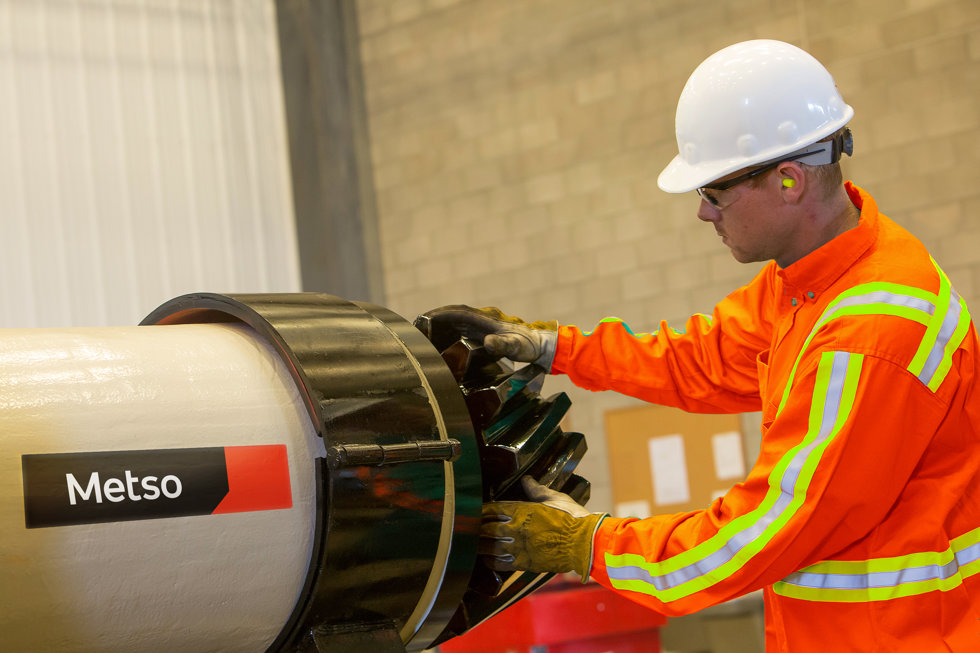
Image 1

From jobs to careers: building progression paths

Rather than training every worker to be an expert, Metso encourages a scalable model where employees can grow into specialized roles over time. “You don’t need everyone to be a gyratory crusher expert,” Nichole explains. “But you do need people who understand the equipment well enough to speak the same language.”

This approach helps mines build “lines of progression” — clear, achievable steps that allow workers to move from basic mechanical roles to more advanced technical positions. It also helps reduce turnover by giving employees a sense of purpose and pride in their work.

Importantly, Metso’s training philosophy balances specialization with cross-skilling. Once a technician has mastered a particular asset, they’re encouraged to expand their knowledge into adjacent areas. “It’s about creating subject matter experts who are also adaptable,” says Nichole.

Image 2

Beyond one-offs: piloting a new training model

Historically, most customer training was reactive — short, one-off sessions during equipment commissioning or triggered by service issues or safety concerns. While these sessions still have their place, Metso is now helping customers adopt a more proactive approach.

The shift began internally. During the COVID-19 pandemic, when many companies cut training budgets, Metso doubled down. The company launched the Metso Academy as a global initiative to build internal competence and prepare for the future. That same model is now being piloted with external customers.

One such pilot is underway with a major North American mining company. “We’re not just doing training anymore,” Nichole says. “We’re building learning journeys — step-by-step programs that develop true competence and confidence.”

These programs are tailored to each site’s needs. Metso begins with a deep-dive audit, reviewing service records, interviewing frontline workers, and identifying operational pain points. From there, a customized curriculum is developed, blending foundational knowledge with role-specific training for operators, maintenance teams, planners, and supervisors. The entire process may take a month or two to build an appropriate program. In more complex cases, it can take up to two quarters to properly audit, customize, and deliver a tailored offer.

Digital tools and the future of Learning

As the industry evolves, so too must the tools used to train its workforce. Metso Academy is investing heavily in digital learning technologies that make training more immersive, accessible, and effective.

Among the latest innovations and tools:

  • Operator Training Simulators (such as Geminex OTS) which allow personnel the chance to practice operating a full plant process or individual process circuits in a safe, virtual environment
  • Virtual Reality (VR) simulators for mill relining
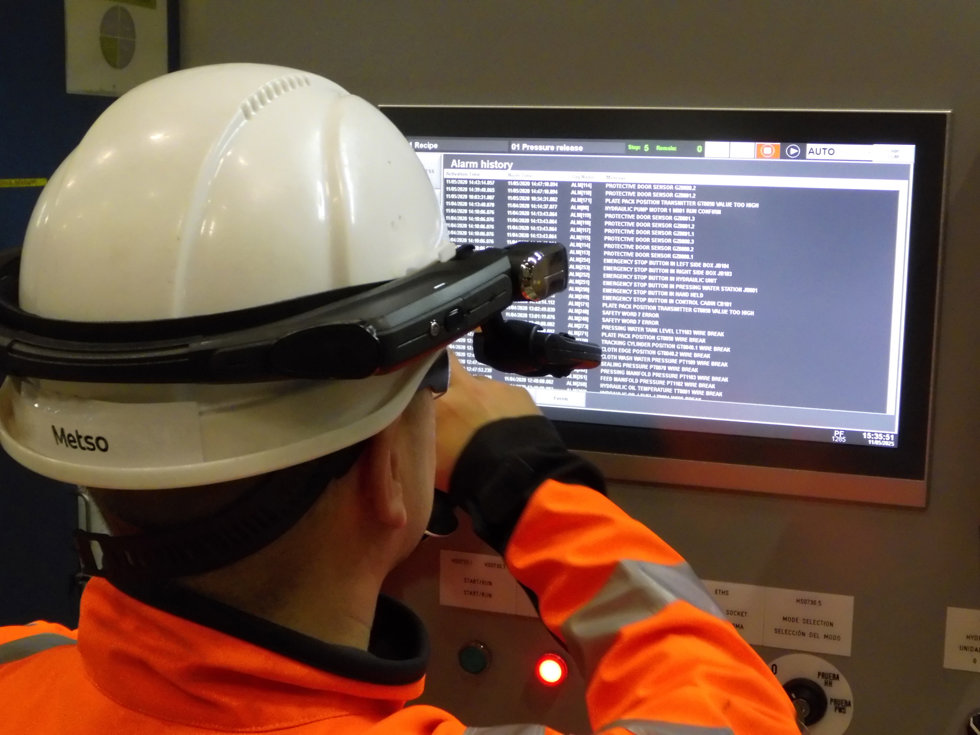
  • Augmented reality (AR) tools like Metso Remote Expert Support (REX) for real-time, on-site guidance
  • 3D models that allow learners to virtually disassemble and explore equipment
  • A Metaverse-style environment for experiential learning

These tools are especially valuable in remote or high-risk environments where hands-on training can be difficult. They also support higher retention rates by engaging learners in more interactive ways. On the formal education side, Finnish based Lappia Vocational School in Tornio and Metso have collaborated for over a decade to integrate advanced Operator Training Simulators (OTS) into vocational education for the mining sector. As part of the foundational qualification program for mine workers and mineral processors, students gain hands-on experience with realistic simulations of mining operations. This long-standing partnership has empowered learners with practical skills in a safe, controlled environment, bridging the gap between theory and real-world application and preparing them for the demands of modern mining production.

Students have appreciated the Geminex OTS learning environment because it allows them to practice different mining processes in controlled conditions. During the exercises, students carry out tasks according to instructions for the production facility. Each student has their own simulation platform in use during training, allowing them to complete the tasks at their own pace.
Harri Aaltonen, a teacher from Lappia Vocational School
Image 4

“Training isn’t just about content anymore,” Nichole notes. “It’s about how you deliver it. We’re moving from being a training provider to a full learning and development organization.”

However, digital tools have not replaced hands-on learning, which is still an integral part of most programs. “We have multiple sites around the world where customers can come to train on actual equipment,” Nichole adds. “Facilities like Bayswater in Perth, Australia and the new state-of-the-art training facility in Mesa, Arizona — opening in early 2026, offer customers the chance to have machine-side learning to hone their maintenance knowledge on many types of equipment. In Finland, customers have access to a dedicated demonstration room at Metso’s Espoo facilities, to gain hands-on experience with sophisticated analyzer equipment. There are other live training offers and facilities available in Tampere for crushers and screens as well as in Sala, Sweden for pumps, among others.”

Partnerships that drive performance

Perhaps the most important shift is in how Metso works with its customers. Rather than acting as an external vendor, Metso positions itself as a strategic partner — one that complements, rather than replaces, the customer’s internal teams.

Our goal isn’t to make customers reliant on us, it’s to empower them. When our service teams and their maintenance crews work together, that’s when you see real results.
Nichole Pritchard, Director of Commercial and Sales Enablement at Metso Academy

This collaborative model is built on trust. While some customers have historically been hesitant to share operational data, Nichole says that’s now changing. “When they begin to see us more as partners— they’re more open. And that allows us to build programs that truly meet their needs.”

The benefits are tangible: reduced downtime, improved asset availability, and a more engaged workforce. As more mines adopt this model, the industry as a whole becomes more resilient.

Conclusion: meeting the moment

The mining industry can’t afford to wait. The skills gap is real, and the consequences of inaction are costly. But with the right approach — one that combines structured learning, digital innovation, hands on learning opportunities, and true partnership — there’s a clear path forward.

Metso Academy is helping lead the way. By investing in people, not just equipment, they’re helping mines build the workforce of the future — one confident, capable technician at a time.

Metso Academy
Bridging the knowledge gap
Mining
Your information is safe. Check our privacy notice for more details.
Thank you!
We will shortly contact you. You can send a new inquiry again after 15 minutes.