The hidden challenge of increasing water reuse
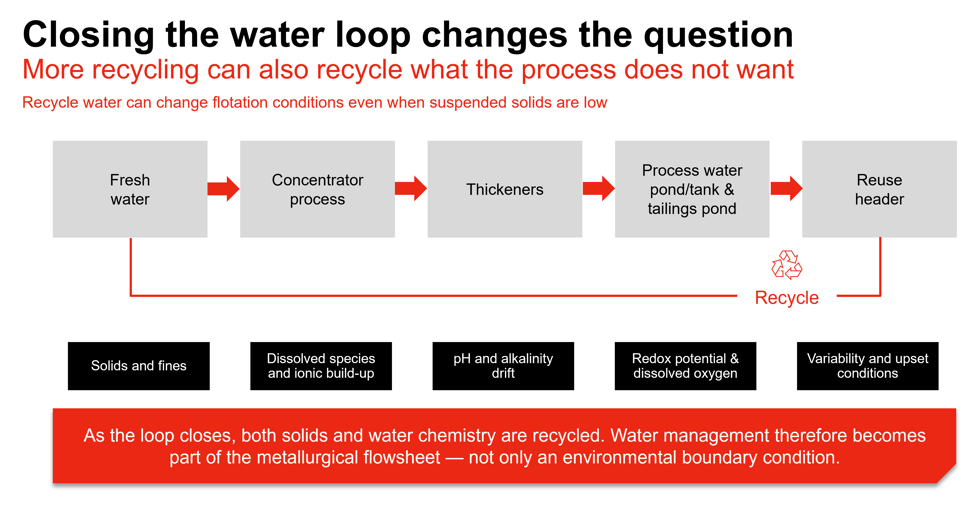
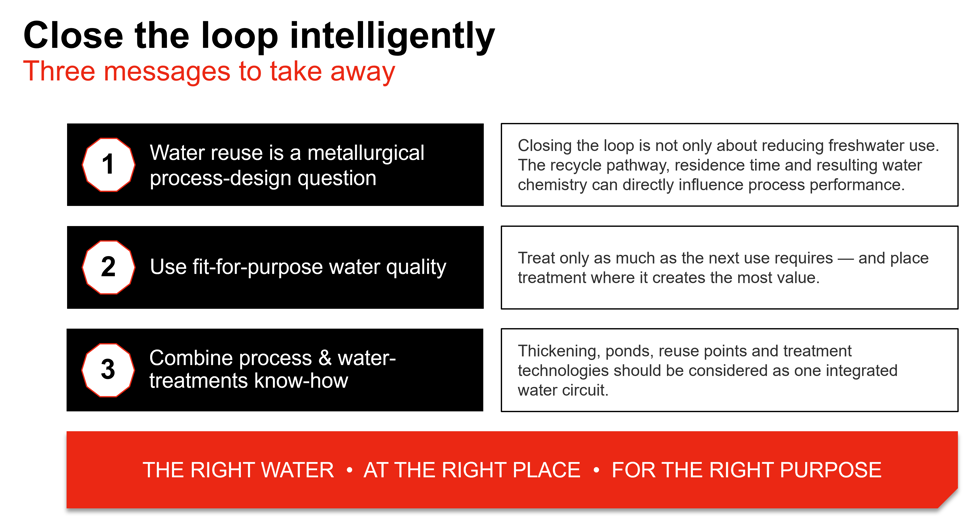
Closing water circuits reduces freshwater demand, but it can also introduce new challenges.
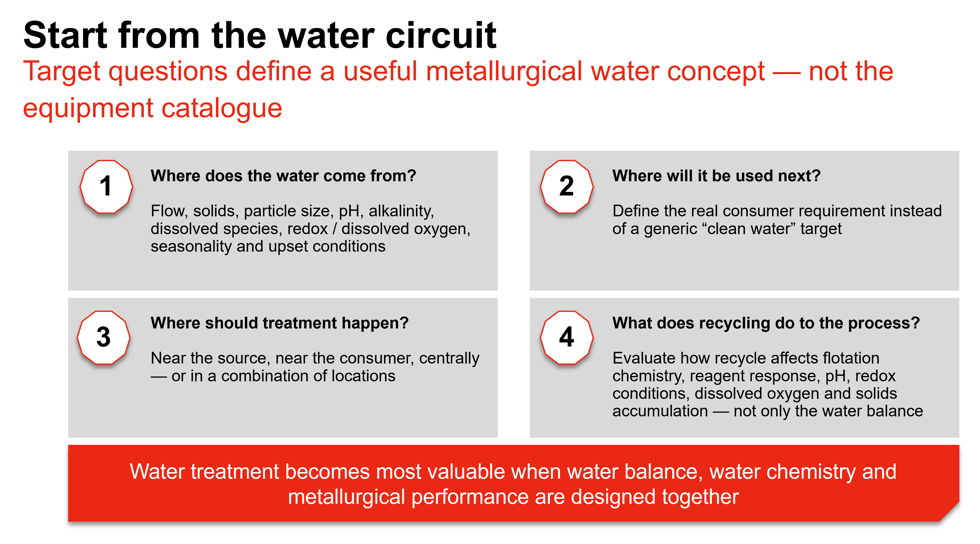
Each recycle loop can return not only water but also suspended solids, dissolved salts, residual reagents, organics, and fine particles back into the process. Over time, these constituents can accumulate and alter water chemistry.
These changes may influence:
- Flotation recovery
- Reagent consumption
- Selectivity
- Froth characteristics
- Process stability
- Equipment wear and fouling
The result is that two plants with identical equipment and ore characteristics can experience different metallurgical performance, with water quality potentially being one of the contributing factors
Moving beyond traditional water loops
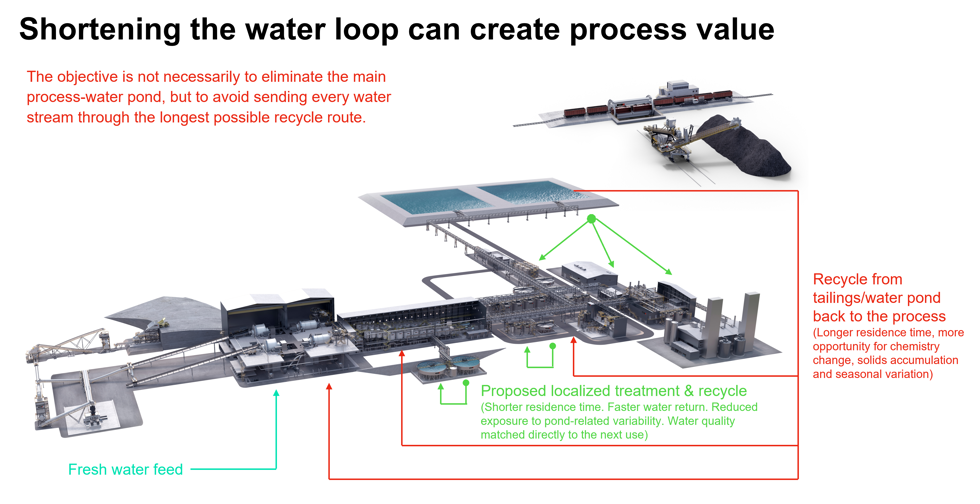
Historically, many concentrators have relied on large ponds and centralized reclaim systems to manage process water.
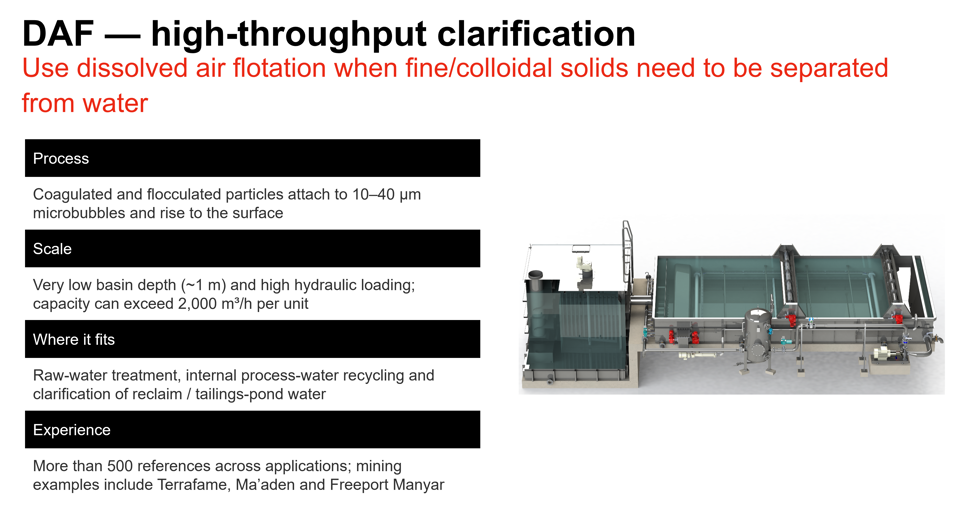
While these systems provide storage and balancing capacity, they can also introduce long residence times, water quality variability, and the recirculation of unwanted solids.
Instead of asking how to recycle more water, operators might consider asking a different question:
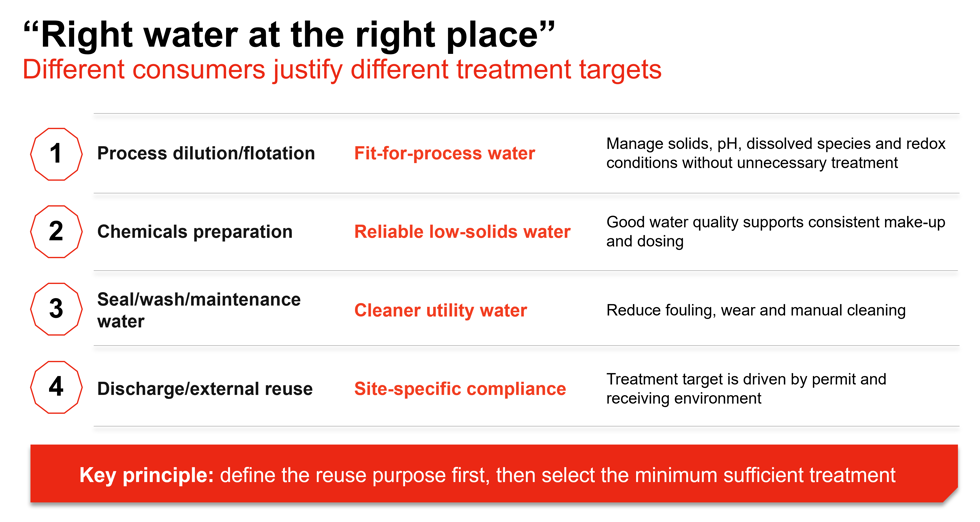
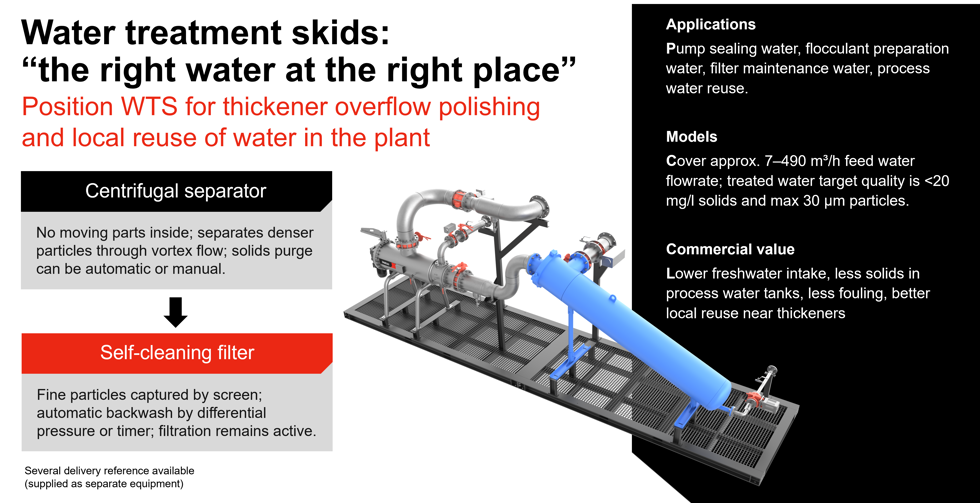
Can water be reused sooner, closer to where it is required, and with only the treatment necessary for that application?
This shift in thinking opens opportunities for localized treatment strategies and shorter water loops.