Mining
Published May 8, 2026

Supercharge your supply chain with smart automation

Andrew Wilshire
Andrew Wilshire
Head of Sales, Axo33, Bulk Material Handling and Port Solutions
In an environment where efficiency and agility are key, many bulk material handling operations are under pressure to do more with less. Modernization, through automation and digitalization, can increase throughput and efficiency, providing a strategic advantage. Smart automation enables increased visibility, more efficient use of resources and higher equipment safety while also strengthening operational performance. This article explains how smart automation and digital twins transform pit to port bulk material handling operations, with proven results across stockyards, ship loaders and rail systems.
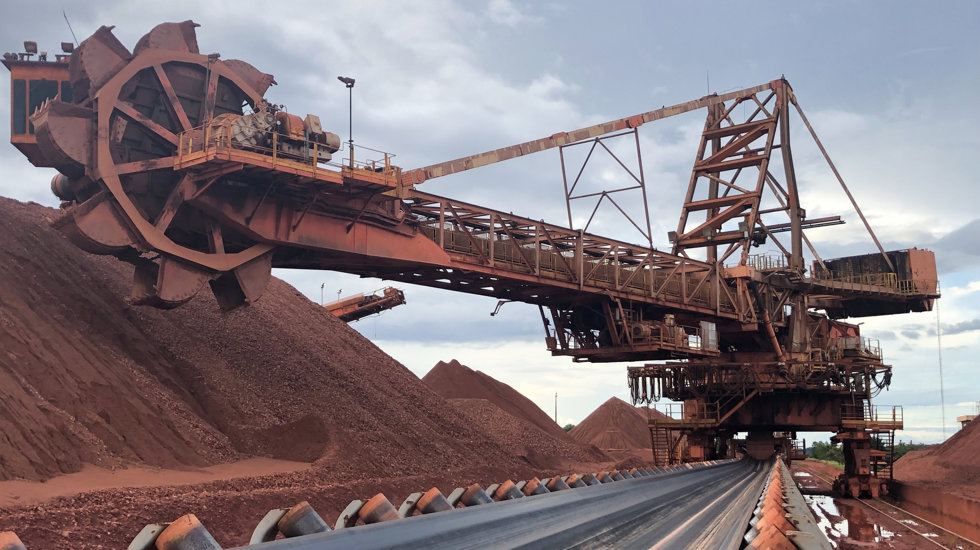
Stacker reclaimer

This article was first published on internationalmining.com


In February 2026, Australian-based MRA Automation was welcomed into the Metso family. This acquisition included 60 automation engineers specialized in bulk materials handling and the software platform Metso Axo33™, which is considered a world leading tool in pit-to-port smart automation.

What is smart automation in bulk material handling?

Smart automation refers to the application of real time data, advanced control systems, software intelligence and system level coordination to optimize the movement, storage, blending, loading and unloading of bulk materials across the pit-to-port value chain. Unlike traditional automation which is focused on fixed logic and standalone machine control, smart automation does the following:

  • Integrates machines, subsystems, and operations into a coordinated whole

  • Leverages real time operational data

  • Enables adaptive, data driven decision making

  • Moves automation from focusing only on machine execution to broader operational optimization

Smart automation delivers significant customer value by transforming bulk material handling operations from manually supervised asset centric systems into integrated, data driven operations. By coordinating machines, material flows and logistics in real time, customers achieve higher throughput, improved safety, greater asset reliability and more consistent product quality while lowering operating cost and lifecycle risk.

Smart automation reduces human exposure to hazardous environments, enables predictive and condition-based maintenance, improves inventory accuracy and blending control, and optimizes energy usage. This allows bulk terminals, mines and processing plants to operate more safely, efficiently and sustainably—all at the same time.

Three types of bulk handling facilities that have the greatest opportunities to implement smart automation are stockyards, ship loading facilities and railcar operations. All three share some commonalities but also have unique challenges of their own when it comes to bulk material handling. Smart automation can have a significant impact on throughput, safety and efficiency.

Simplifying management with stockyard automation software

Managing bulk materials in a stockyard faces multiple challenges when it comes to the efficient handling organization and storage of large quantities of materials. A few common challenges in stockyard operations are:

  • Poor machine throughput capacity compared to nameplate

  • Uneven material flow

  • High mechanical stress and wear on equipment

  • Manual planning, leading to inefficiencies

Stockyards have many opportunities to benefit from smart automation in managing the operation of the core material handling equipment, such as stackers and bucket wheel reclaimers. The Axo33™ platform is scanning-technology agnostic, supporting both radar and laser solutions, with advanced environmental filtering to ensure reliable performance even in dust, rain, fog and snow. The platform can be deployed on both Metso and competitor equipment following an initial assessment.

Currently the tool has fully automated over 35 stockyard machines with a digital twin developed by using an underlying volumetric model with data from stacking, reclaiming and machine positions. This model is then enhanced with 3D laser or radar scanners installed on the machine or in the surrounding yard. Drone surveys have confirmed that the digital twin matches the real material on site with 99% accuracy.

The platform supports all major stockyard machine types, including front-end loaders, and is proven in coal, iron ore, bauxite, heavy metals and potash.
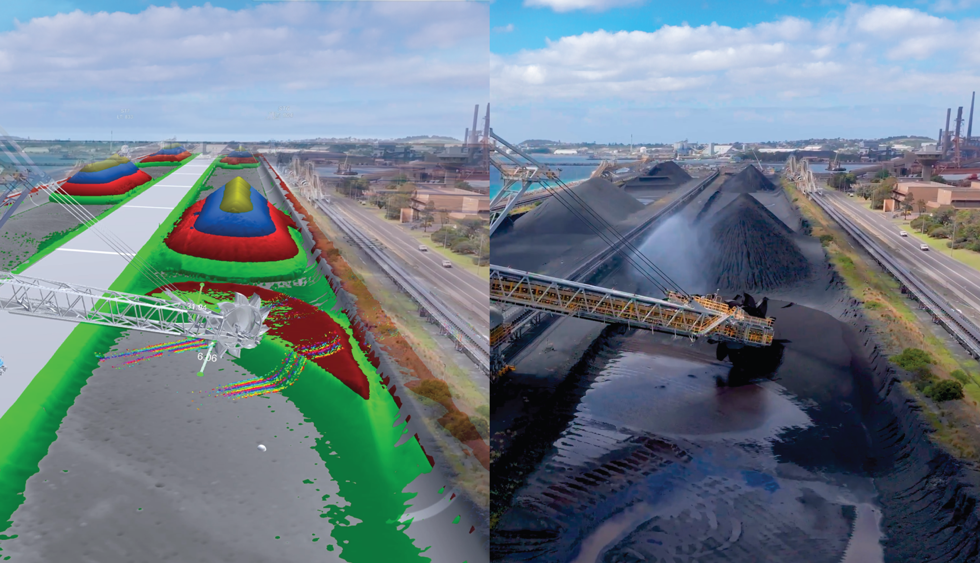
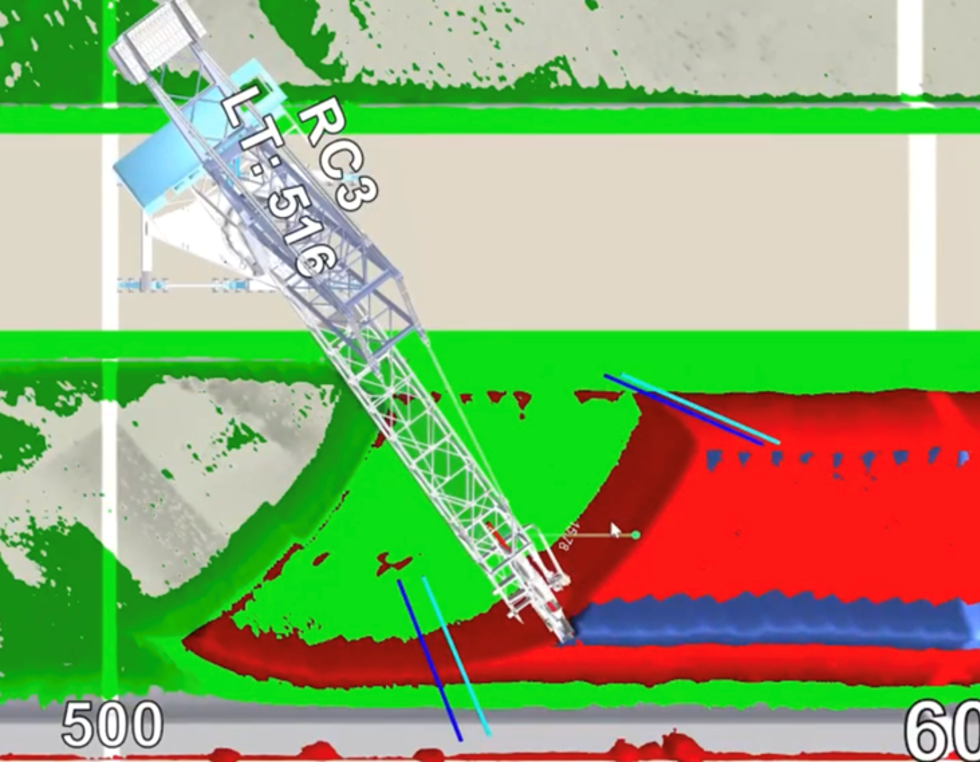
stockyard digital twin
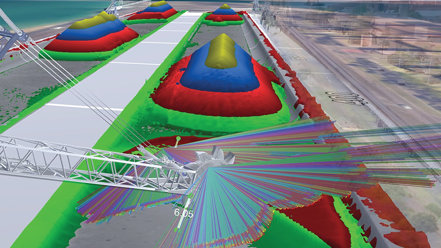
An example of the stockyard digital twin from Port Kembla Coal Terminal (PKCT), one hour south of Sydney. The PKCT digital twin shows the 5 metre bench heights in different colors and the 3D laser rainbow arrays scanning the reclaiming face.

Increased throughput: 

At PKCT, smart automation increased the gross loading rate of a vessel by more than 25% after being fully de-manned, automated and optimized. This increase in throughput is due to many factors, with the largest contributor being turnaround efficiency and the reduction of air swinging. As a guide, the gains for a bucketwheel reclaimer from optimized turnarounds will vary with material density. For coal, throughput efficiency gains of up to 15% can be expected, and up to 7% for iron ore.

The stockpile modelling and reclaimer optimization were major factors in our efficiency gains.
Travis Burton, Automation and Network Specialist, PKCT
Optimized reclaiming
The digital twin shows the optimized turnaround positions (blue markers) and machine to stockpile separation distances. Optimized reclaiming also controls the slew speed, slowing down for spikes in material or speeding up to produce an even material flow.

Asset protection:

Smart automation will stack more even stockpiles and with real-time knowledge of the reclaiming face, smooth reclaiming to reduce stress on machine bearings, the boom and outgoing conveyor network. The reduction in machine stress events can be quite profound. For example, one export terminal in Vancouver recorded 270 bucketwheel overload faults in the month prior to installation and only six afterwards—a 97% reduction.

Cost savings:

Many factors combine to produce significant cost savings. At PKCT, these savings included lower vessel demurrage charges, reduced staff levels (a team of four machine operators were replaced by a single operator in the control room) and lower energy consumption.

Quality tracking:

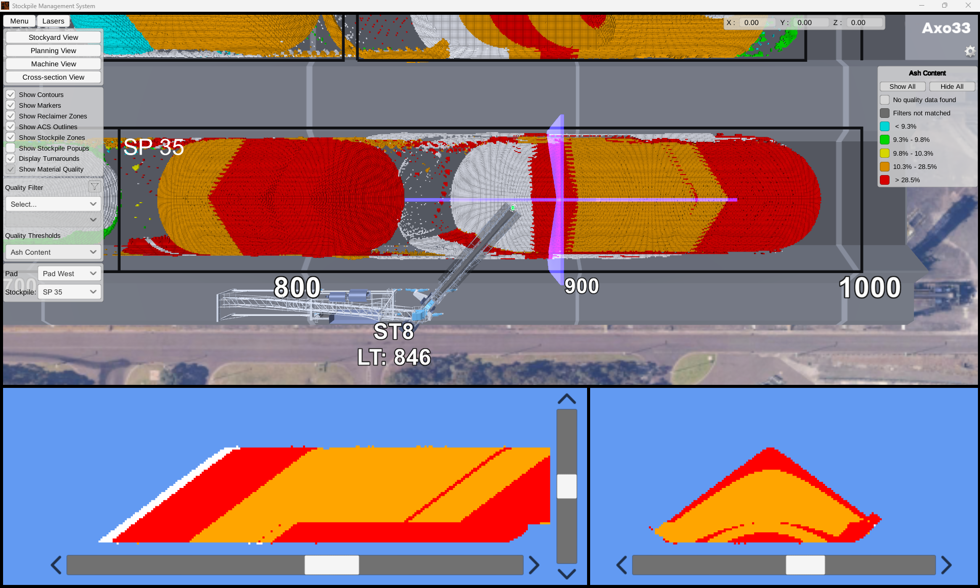
Quality data from lab sampling or an online analyzer can be modelled into the stockpile in 40 cm cubic blocks as it is stacked and then reclaimed. This enables the site planning team to see inside the stockpile, analogous to an MRI scan.

Planning teams no longer need to rely on stockpile averages. Now, they have tools to model how and where to stack, and—before reclaiming—analyze which of many prospective tasks can produce the optimal quality outcomes. This will help a site meet contracted requirements, reduce penalties for under delivery and not forego profits by giving away higher quality material. At PKCT, the planning team models the blend of ash, moisture and calorific value within each stockpile, and uses this to project future reclaim outcomes. Predicted quality outcomes were found to be within ± 1% of actual reclaim results sampled at vessel loading.

Challenge

  • Manual planning with limited real-time visibility
  • Uneven material flow and reclaim inefficiencies
  • High mechanical stress and frequent overload events
  • Inconsistent blend quality and limited predictive control
  • Safety risks and reliance on on-site operators

Solution

Axo33™ smart automation using a digital twin to coordinate machines, material flow and planning decisions in real time

Proven impact at Port Kembla Coal Terminal (PKCT)

  • +25% vessel gross loading rate
  • 97% reduction in bucketwheel overload faults
  • ±1% quality prediction accuracy
digital twin
The digital twin from PKCT shows the various levels of coal ash throughout the stockpile.

Ship loader automation

Smart automation for ship loading is a far bigger challenge than in the stockyard as you now need to model the loading of a moving vessel, adjusting for tides, passing vessels, vessel list and trim, and vessel drift. A few problematic areas to consider are:

  • Dealing with moving vessels and changing conditions

  • Collision risks near hatches and deck equipment

  • Operator exposure in high-risk areas

Using a digital twin to create a highly accurate 3D model of the ship loading operation requires 4-8 3D lasers. As in the stockyard, the data from the digital twin integrates with the PLC system to support better decision making.

potash ship loader
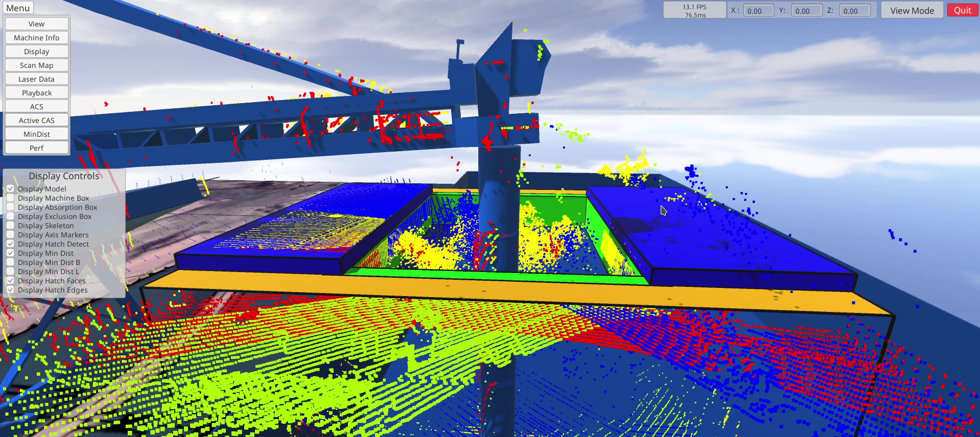
The digital twin for this potash ship loader is created using 4 x 3D lasers, each shown in a different color. The potash dust is seen and ignored with environmental filtering and the hatch position is locked-in, which can enable full automation, remote operations and de-manning.

Asset protection:

The collision avoidance system (CAS) helps ensure the continuity of operations as it protects the ship loader boom and spout from collisions with the hatch, deck gear and obstacles on the wharf. The operator receives a SCADA-based warning and an automated slow down and stop.

Improved safety:

More often, an operator is located on the ship loader close to the hatch. Smart automation can help provide the level of trust needed to move the operator to a remote control room.

Increased efficiency:

Automated in-hatch loading will enable a vessel to be loaded without the operator being actively involved, with the system following a selected loading recipe. The introduction of Vessel Plan Automation—currently in development—will enable the de-manned loading of the vessel, including hatch-changes, following a vessel plan provided for safe operations.

Prior to the acquisition, MRA had installed six ship loader CAS systems in North America over the last few years. Each CAS provides the operator with the ability to turn off the system in “by-pass mode” to enable independent operations; however, based on project estimates, the by-pass mode is used less than 1% of the time.

Rail wagon automation

Rail wagon operations also face a set of specific challenges related to speed, wagon position, residual material and the risk of derailment. Common challenges at rail sites include:

  • Inconsistent loading and unloading accuracy

  • Safety risks and lost revenue from spillage and derailment

  • Manual intervention slowing throughput

Building a digital twin enables better management of these operational issues and risks. Axo33™ has fully automated the volumetric loading and unloading of more than 17 million rail wagons across train load outs and dump stations, with each system integrating seamlessly with the PLC to optimize machine actions.

Rail wagon automation
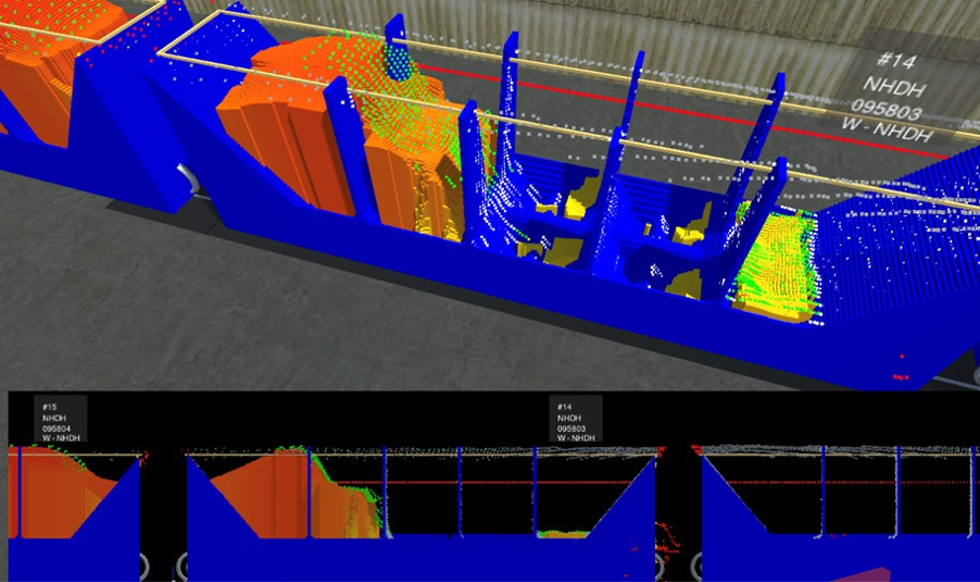
The digital twin of the dump station at Port Waratah Coal Services shows the coal bottom unloading and the tracking of material by wagon.

Increased efficiency:

The optimized loading of coal has increased loading capacity by an estimated 7% compared to previously manually operated systems.

Cost savings:

The now man-less, operated train load out saves labour costs and eliminates rail network fines for both underloading and overloading.

Improved safety:

Derailment risk from material spillage on the track has been mitigated.

From automation to impact – moving more with smart automation

Across rail, stockyard and ship loading operations, smart automation has moved from a ‘nice-to-have’ to an operational necessity. Intelligent automation systems are no longer optional in today’s competitive climate, as it’s the fastest and most reliable way for bulk material operators to increase throughput, improve safety and lower operating cost while gaining control over increasingly complex operations. The Axo33™ smart automation solution stands apart by seamlessly enhancing existing control systems with real-time visibility, system level optimization and proven pit-to-port intelligence.

The result is safer operations, higher asset utilization, predictable performance and true operational insight backed by Metso’s global bulk material handling expertise and technical support network. That’s why, together, we are the partner for positive change.

Enjoyed this article? Try this next
5 reasons to choose Bulk Ore Sorting
Bulk ore sorting leads to crushing less waste and send less waste to the process, decreasing fine tailings drastically.
Read more
Mining
Your information is safe. Check our privacy notice for more details.
Thank you!
We will shortly contact you. You can send a new inquiry again after 15 minutes.