This article was first published in Mining Business Africa - Opens in a new window.
Understandably, African mining companies have their sights set on the bigger picture of increased revenue. However, in this zealous pursuit, their major oversight could be neglecting smaller, yet crucial, details of their operations.
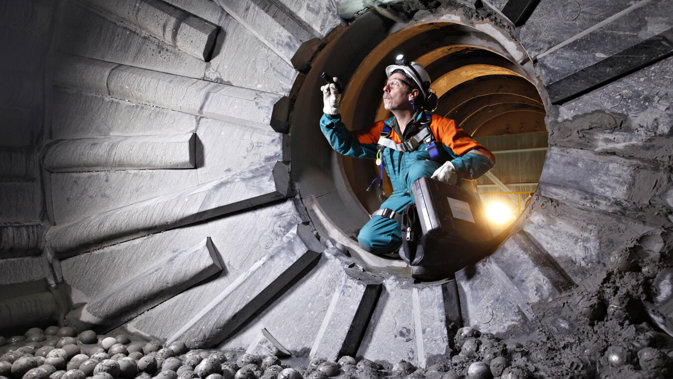
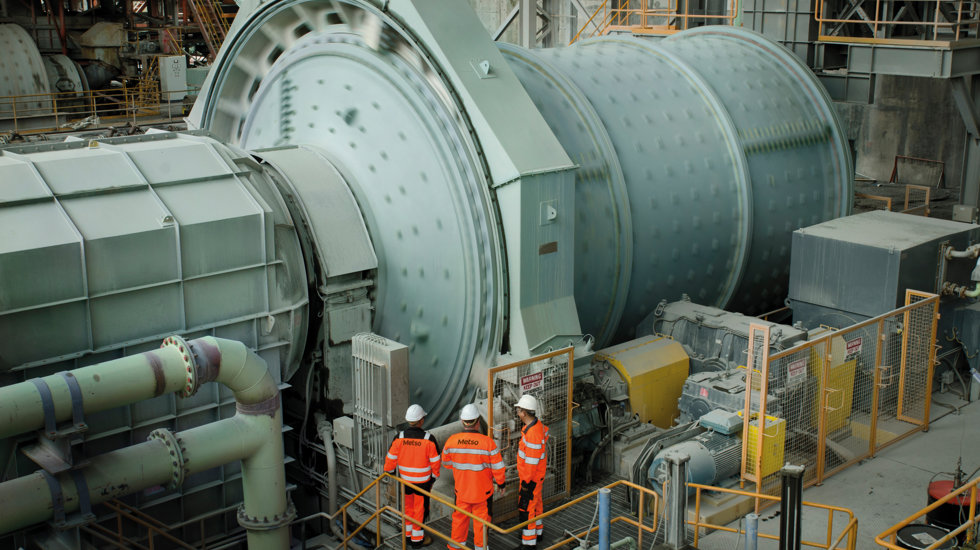
One such detail is mill lining performance. Though seemingly minor when looking at the full processing circuit, liner underperformance can add up over time and significantly hinder the realization of larger goals. Many sites tend to reorder the same liners that were initially selected when their mill was installed. However, as conditions such as ore characteristics or operating parameters change over time, liners may no longer match well to the application, and problems can surface.
The importance of a quick response
Accordingly, plant engineers need to act promptly once they notice that a reduction in the output of a ball or SAG mill corresponds with the wear of the mill lining. Nonetheless, finding the root cause and the best possible solution can be a challenge. Metso's mill lining team has been consulting on mill lining-related matters for hundreds of projects worldwide for decades.
Sum of many parts
Drawing from this extensive experience, they share invaluable insights on optimizing lining performance and addressing mill lining-related challenges. What is evident from their input is that optimizing mill lining and grinding performance involves a sum of many integral parts, all working in sync.
Identifying root causes
At the outset, they underline the importance of identifying the root causes of common problems affecting mill production, which guides the approach to lining optimization.
Production KPIs
Håkan Ståhlbröst, Head of Application Support and Value Creation, Mill Lining, asserts that, in most cases, changes in operating parameters and production key performance indicators (KPIs) can affect the wear life of mill linings as well as the actual liner performance. These KPIs include the charge level in the mill, the speed of the mill, the condition of the media, and the ore feed (percentage blend of feed materials) to the mill. Continuously monitoring these KPIs can provide data that makes it possible to anticipate how the wear will progress, and it is also the base for optimization of future liner generations.
Key elements at the design stage
Based on the data gathered, the following elements should be considered to determine the design of the next set of liners:
1. Materials for Construction
During the design stage, Metso uses known data and optimizes the liners accordingly, Ståhlbröst explains. “To optimize liner wear life and get balance between different sections of the mill, the liner material can be redistributed so we move excess material from a low-wear area in the mill, making the liner thinner, and instead increase the height/thickness in a high-wear area. It is also possible to change the actual rubber compound or metallic alloy to better meet the wear life targets.”
2. Variables Impacting Grinding Performance
Lifter profile, height, quantity, and overall volume are the primary lining design variables that impact grinding performance. Consequently, Ståhlbröst advises, “It is desirable to have a well-balanced lining where different parts wear out concurrently while retaining an efficient profile over the life of the lining.”
3. Fluctuations in Rock and Ore Quality
Another factor to consider in liner design is that rock and ore are natural materials with variable properties. A lot of control and skill are needed to operate a comminution circuit in a reasonably steady state, meaning that both smaller and larger fluctuations must be anticipated.
Thus, a lining with a long service life that doesn’t infringe on the mill volume and matches the overall liner life with reline intervals is required. On how to create a suitable design, Ståhlbröst suggests, “It is important to monitor every single mill in detail regularly, capture and anticipate these changes, and optimize the liner design accordingly. Typically, liner design constantly evolves over the life of the asset.”
Liner design configuration
Asked about determining the best liner material and geometry, Cameron Mather of Technical Sales Support (Consumables) for the African market explains that the starting point is understanding that every mill has unique lining requirements. He highlights customer KPIs, critical mill operating conditions, and actual mill design and drilling patterns as key factors in design configuration.