Mining
Published Jun 26, 2026

Demystifying grinding mill gear lubrication

Oscar Harrison
Oscar Harrison
Product Director, Lubrication Systems and MRE Parts
When it comes to grinding mill ring gear lubrication, there is a tidal wave of technical detail around the different lubricants, lubrication system designs, application rates and control strategies for how each lubricant is applied. This article breaks down the confusion to a few key points to ensure optimal gear lubrication.
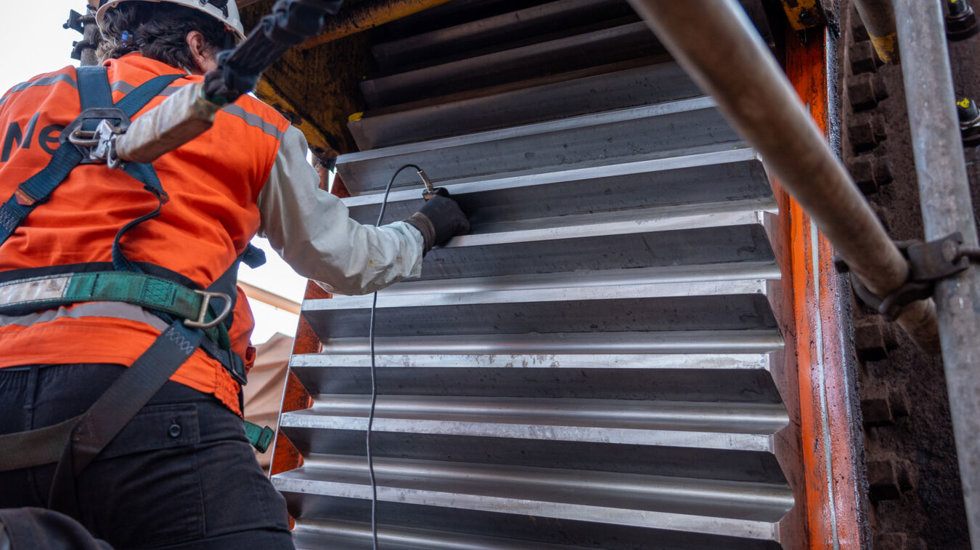
Photo showing Metso’s eddy current array process
Metso’s eddy current array process

All lubricants are not created equal 

Ring gear teeth operate under particularly challenging conditions, which largely prevent working flanks from achieving complete separation with a simple lubricant. Ring gears are installed independent of the pinion and attached to the mill’s flexible shell, causing inherent component misalignment. In combination with high tooth-face loads and low operating speeds, these factors promote mixed-friction regimes. Consequently, the lubricant must deliver robust load-carrying capacity and effective surface protection to reliably prevent metal-to-metal contact.

The unique operational challenges of ring gears necessitate application-specific lubricants. These must not only provide an appropriate base oil viscosity but also incorporate advanced additive systems to manage boundary lubrication conditions, enhance adhesion, and ensure reliable performance. Additional formulation requirements—tailored to the specific operating environment—are critical, extending beyond the general considerations outlined here.

Historically, these attributes were achieved using bitumen-based products or greases with solid lubricant particles. However, state-of-the-art ring gear lubrication includes highly viscous oil blends with an advanced additive pack. These modern lubricants not only outperform traditional lubricants by preventing working surface wear and damage, but they have also resolved many traditional lubricant challenges, such as pumping and spraying difficulties, residual compound build-up in gear roots, hazardous and fickle diluents, and the tremendous effort required to clean off residual lubricant for gear inspection tactics. Furthermore, new high-performance oil technology can also impact sustainability, due to the use of smaller quantities compared to other lubricant technologies. 

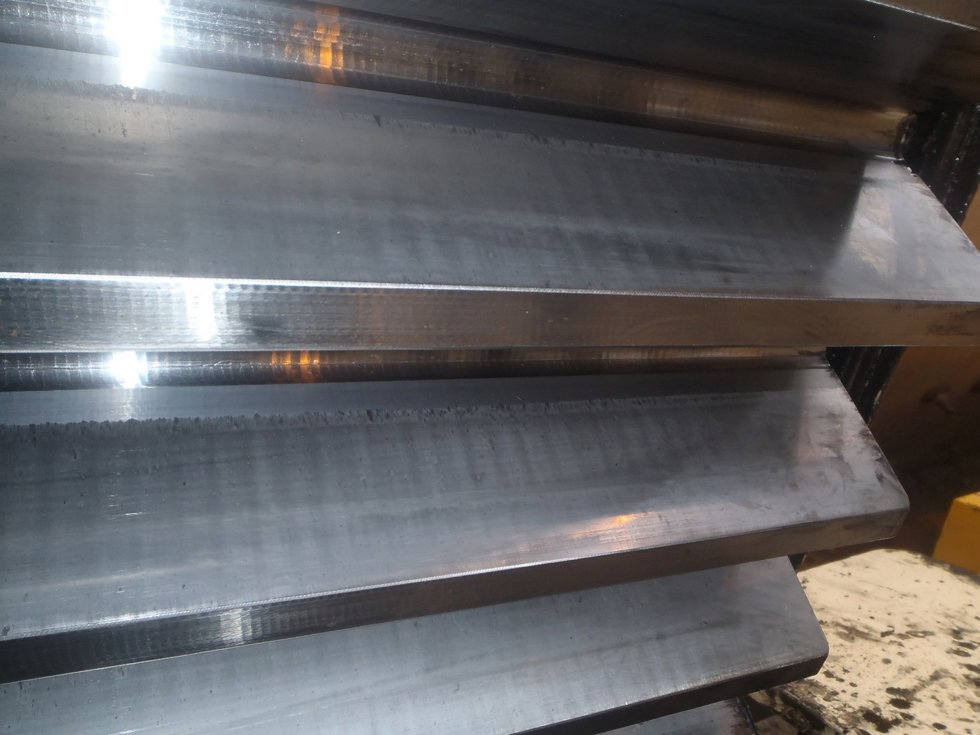
Example of a pinion in excellent condition using a modern thick oil lubricant in a dribble bar application.

With modern, highly viscous ring gear oil, the adage not all lubricants are created equal applies. When deciphering the lubricant product datasheet, it is particularly important to check performance against the DIN/ISO 14635-1 FZG scuffing test, DIN 51350 T04 four-ball weld test, the lubricant viscosity and the presence of a diluent. 

well-designed lubrication system with minimal heating in the right locations should be able to pump a high performance, modern thick oil-type lubricant without a diluent in all typical ambient conditions. However, the thicker the oil, the more heating required. There is a delicate balance between high viscosity, performance and pumpability.

The table in Figure 1 summarizes the minimum physical attributes required for lubricants to be used during the warranty period for new Metso horizontal grinding mills and spare ring gears and pinions: 


Property 

Test method 

Requirement 

Viscosity 

ASTM D445 

Lubricant type 

Asphaltic 

860cSt @ 100˚C 

Oil 

8170cSt @ 40˚C 

Grease 

8170cSt @ 40˚C 

Rust and oxidation inhibitors 


Required 

Anti-scuff additives 


Required 

Solid lubricants 


Required for grease 

FZG scuffing test – failure load stage 

DIN ISO 14635-3, A / 2.8 / 50 

≥12 stages 

FZG scuffing test – change of weight 

DIN ISO 14635-3, A / 2.8 / 50 

≤0.2mg/kWh 

Four ball weld load 

DIN ISO 51350-4 

8000N 


Figure 1: Table summarizing
Metso’s minimum required gear lubricant properties.


Typically, modern
 and highly viscous oil-type lubricants are more expensive to manufacture and cost more per kilogram. However, they can also be applied at a lower application rate to leverage their advanced performanceand, above all, help extend the service life of the gears.
 

quality lubricant’s less obvious commercial value beyond reduced wear rate and lower application rate is the reduced time and effort required to clean the gear for regular condition-based inspection tactics.  

Lubrication is only part of the maintenance strategy 

Lubrication plays a key role in ring gear and pinion longevity, but it is only part of the puzzle. A suite of best practice maintenance tactics is also needed to ensure gearset life and reliability, including: 

  • Regular gear and pinion teeth non-destructive testing (NDT) – Mag-particle inspection has been the stalwart for many decades, however, the current state-of-the-art technology is Eddy Current Array (ECA) conforming to testing method ASTM E2905, which is much quicker and provides a digital record of the teeth condition. Typically, the entire gearset is checked yearly.  
    • Of particular importance is task timing, often falling on the critical path with relining activities. There is significant advantage to using modern, thick oil lubricants as they can be cleaned off much more quickly than traditional lubricants, particularly bitumen-based, residual type lubricants. 

  • Regular visual inspection – An experienced gearing technician can provide critical information about the gear condition and spot the onset of most failure modes. Best practice is to perform a spot check of a few random teeth every shutdown along with a full annual visual inspection, which goes hand-in-hand with the yearly NDT inspection. 

Photo showing early-stage scuffing on a 14MW ring gear less than two years old.
  • Regular visual inspection of gear guard seals – This inspection should be performed every shutdown to ensure the seals remain in a serviceable condition. 
  • Regular visual inspection for slurry leaks – It is critical to perform a basic walk-around every shift to detect issues such as broken liner bolts that can very quickly fill a gear guard with highly abrasive slurry. 
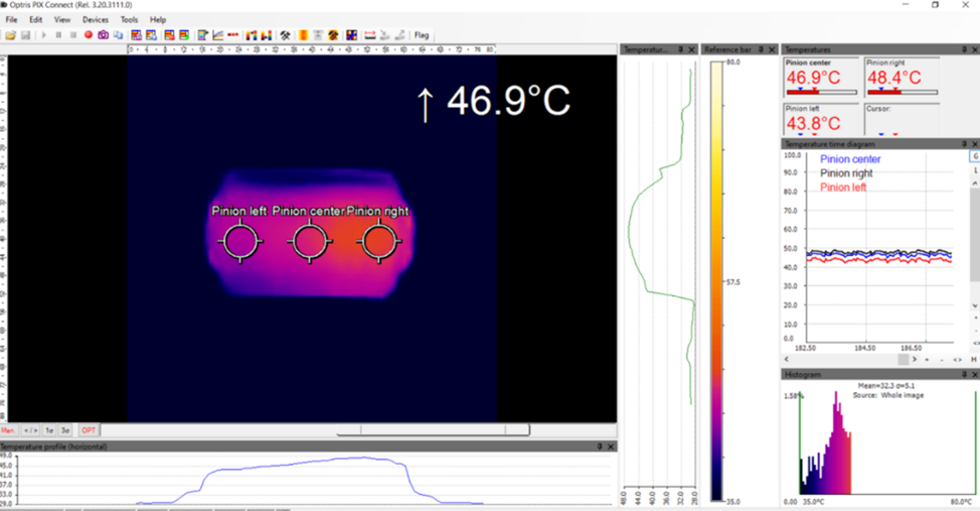
  • Pinion temperature monitoring – This is traditionally accomplished by a technician opening the pinion hatch daily and using a hand-held temperature gun to measure the temperature profile across the pinion flanks. However, current best practice is to install a built-in temperature monitoring system connected to the plant control system for constant and consistent temperature monitoring. 
Photo of a Metso pinion temperature monitoring system (PTMS) along with thermal image output.
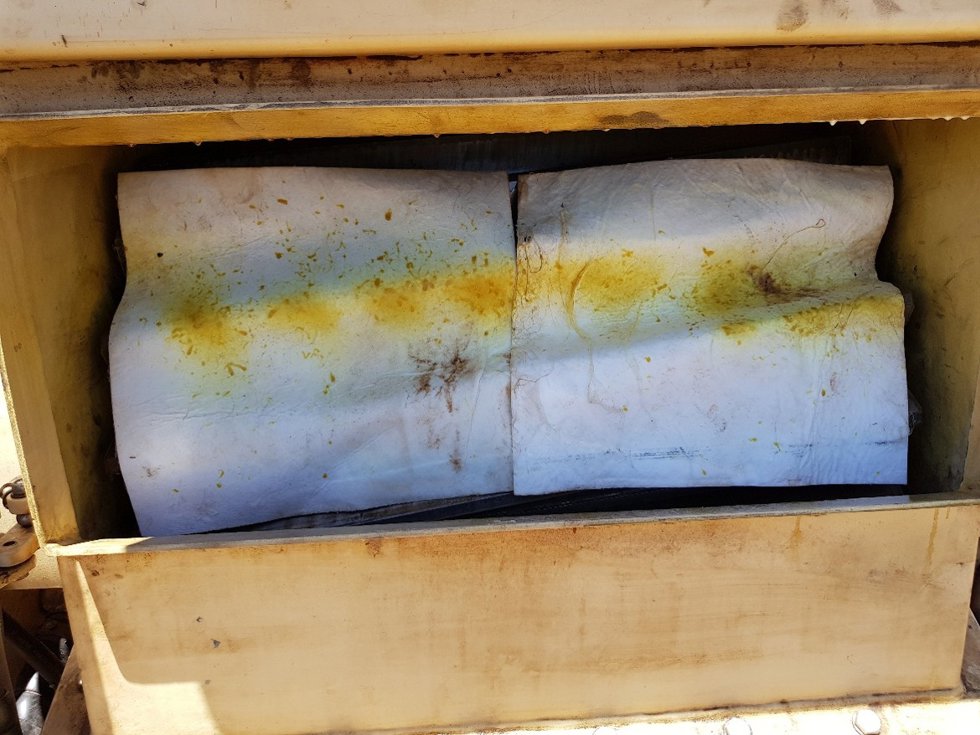
  • Lubrication system function testing – Performed during every shutdown, this simple tactic involves placing a clean target on the pinion and cycling the spray system before inspecting the lubricant pattern on the target.  
Photo showing a spray pattern test performed using white oil mats as the target.

Having the best lubricant is fine, but you need to ensure it gets to the gearset

The final piece of the puzzle is to ensure the lubricant actually gets where it is needed in the right quantities at the right times. 

Typically, grinding mill ring gear lubricant is applied by intermittent pneumatic spray, which suits the application nicely. There are, however, many different system designs, the most common of which are single-line progressive-type systems and dual-line type systems. Both systems are functional; however, the key is to ensure the right instrumentation and control logic is applied to each. 

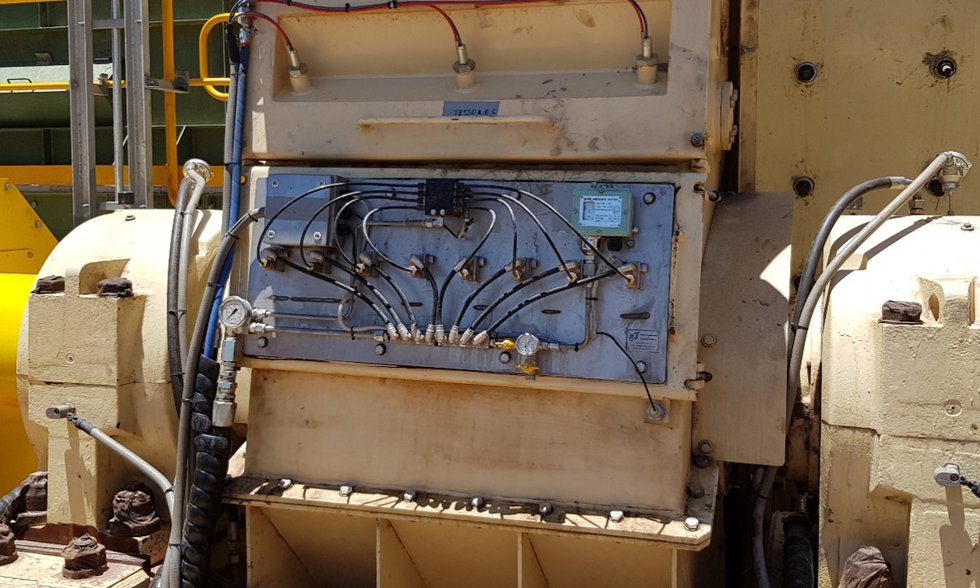
It is critical that both the air supply and the lubricant supply is monitored as closely as possible to the spray nozzles to detect as many system failure modes as possible. Typically, this means an air pressure switch at the nozzle air supply manifold on the spray door and proximity switches mounted on the lubricant distribution valve/divider monitoring the lubricant delivery directly to the nozzles. Both sensors must have ALARM and INTERLOCK logic with appropriate setpoints to prevent lapses in lubrication longer than 20 minutes. In modern high-power applications, lubrication system failure has caused severe scuffing in a little as one hour.

Photo showing a typical Metso supplied single-line progressive spray system, with air and lubricant monitoring instrumentation in optimal position.

There are two options where lubrication can be delivered by the spray systems described above: sprayed directly onto the working pinion flanks, or onto the working gear flanks. Historically, spraying the gear has been more popular, however, this has largely been driven by the use of bitumen-based lubricants that require a diluent to be added to thin the lubricant in the drum and allow it to be pumped and sprayed before flashing off on the gear and achieving full viscosity. The diluent flashing off takes some time, so spraying the gear allows more time before the lubricant is put to work through the gear mesh.  

Current best practice is to spray the pinion in smaller, more frequent dosages. Modern viscous oils don’t require a diluent to facilitate this practice. 

What does all this mean? 

Your grinding mill gearset lubricant is critical to prevent excessive damage and wear during operation. It also influences other equally important pieces of the maintenance and asset management puzzle to ensure your gearset performs optimally throughout its intended service life. 

Given the significant impact of lubricant selection on ring gear reliability and maintenance, Metso has partnered with an industry-leading lubricant manufacturer to develop a high-performance solution tailored to its specific requirements. This modern, high-viscosity open gear oil is engineered to optimize the performance of ring gear and pinion systems. 

Metso Open Gear oil 10 (part number OG-OIL10) delivers outstanding wear protection and offers viscosity optimized to achieve reliable pumping and spraying without compromising its physical performance. 

Mining
Your information is safe. Check our privacy notice for more details.
Thank you!
We will shortly contact you. You can send a new inquiry again after 15 minutes.