
Mining
Jun 17, 2026

Expert Q&A: Unlocking the potential of VRMs in mining

Christoph Hoetzel
Christoph Hoetzel
SVP, Grinding
Tim Robinson
Tim Robinson
VP, Minerals Sales
In an interview with North American Mining, Metso experts share how VRMs are transforming efficient grinding in mining.
VRM
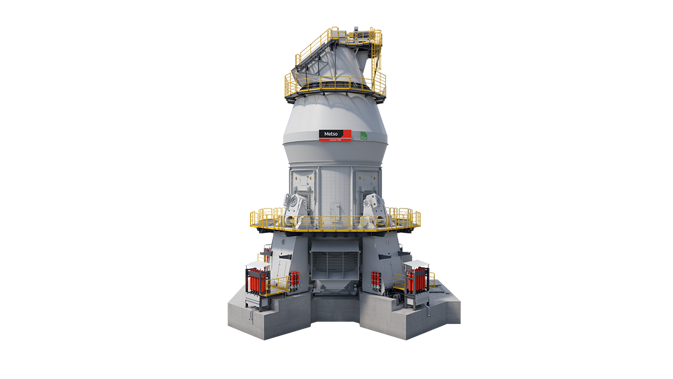
With the Metso Loesche VRM, high reduction ratio’s of 3000:1 are possible to achieve, making single stage grinding possible and removing the need for multiple grinding and classification steps.

First published on North American Mining.


Metso and Loesche bring 
complementary strengths that, together, remove the traditional barriers and accelerate adoption of Vertical Roller Mill (VRM) technology in mining.  

VRMs fundamentally change how grinding and classification are combined, which opens a different performance potential compared to traditional concepts. Loesche brings more than 100 years of VRM design and operating experience, with thousands of mills running successfully at large industrial scale worldwide, providing a mature and proven technology base. 

Metso complements this with deep mineral processing expertise, from ore characterisation and flowsheet development to mining-specific engineering, service, and lifecycle support. Together, we close the gap between industrial VRM technology and the practical requirements of mining applications. 

The timing is deliberate. Rising energy costs, water constraints, emissions targets, and tighter permitting are now directly influencing project decisions. In parallel, VRM technology has matured, with advances in wear protection, control, and operational stability enabling reliable performance on harder ores and higher throughputs. 

By aligning on joint R&D, testing, and go-to-market execution, we can offer a VRM solution that is optimised for mining from the outset, reducing technical and commercial risk for owners and EPCs. With many projects—particularly in North America—at early planning or rebuild stages, this is exactly the right moment to bring VRMs into the mainstream flowsheet conversation.
VRM

Where do you see the VRM fitting most naturally into flowsheets in terms of ore types, flowsheet configurations, and project circumstances?  

We see VRMs fitting most naturally into flowsheets where energy efficiency, water availability, and sustainability constraints are becoming decisive design drivers. These factors are increasingly influencing project economics and permitting, especially when they’re addressed early in flowsheet development rather than retrofitted later. 

VRMs are particularly well suited to hard-rock ores that require a fine and well-controlled product size distribution for downstream beneficiation.

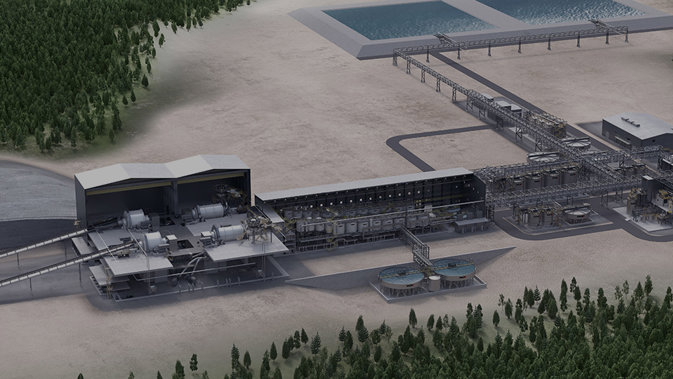
In addition to providing improved energy efficiency this technology combines grinding and classification in a single unit. This reduces circuit complexity, plant footprint, and the amount of auxiliary equipment required. At the same time, VRMs are also very well suited as pebble grinding solutions in brownfield applications. In existing SAG-based circuits, they can be used to debottleneck the plant, reduce recirculating loads, and increase throughput without major expansion, while grinding pebbles down to flotation-relevant fineness for direct downstream processing.

What has the initial reaction from North American customers been like? 

Initial reactions have been very positive and there is a definite interest from both mining operations as well as Engineering firms. VRM technology is a strong fit for gold roasting applications as well as copper, nickel and rare earth concentrator and so far, both the energy and water saving aspects are what is driving initial interest. We are already now introducing and discussing applications and use cases with many of our larger customers. Many of the more progressive engineering companies are eager to learn about references and test work that has been completed. 

It is also exciting for our own sales teams to bring this technology into our set of offerings. What is interesting is how some of our experts who specialize in process steps downstream of the mill, such as flotation, are very aware of the benefits that VRM mills can deliver to their process stage and are helping to educate and promote the technology amongst team members.

Wear performance is a critical concern when adopting VRMs for mineral processing applications. Are VRMs more as a solution for softer feed such as in the cement or other industrial applications?

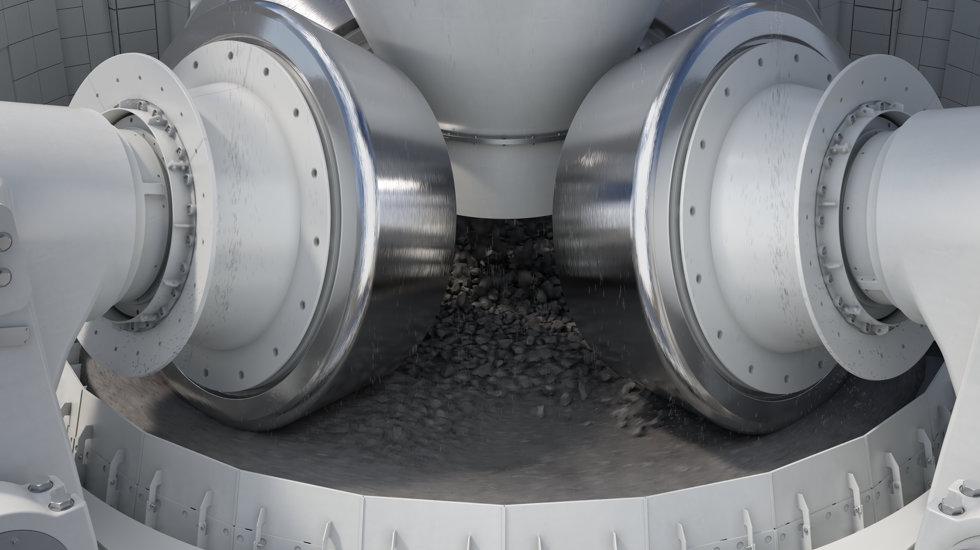
It may actually be the opposite. VRM is commonly used in cement due to the need for dry processing. However, our test work database on hard ores suggest that the optimized wear part configuration of the Metso Loesche VRM can outperform many conventional comminution mechanisms.

As part of the cooperation between Metso and Loesche, wear protection concepts have been specifically reviewed, tested, and—where necessary—further improved for the demands of the mining industry. This includes wear part design, material selection, and operating strategies tailored to hard-rock conditions. 

Equally important is support in operation. Through Metso’s global service network, wear parts and technical expertise are readily available, which is critical for maintaining stable operation. In practice, we see availability levels above 90%, which is comparable to—and in some cases higher than—conventional grinding technologies.

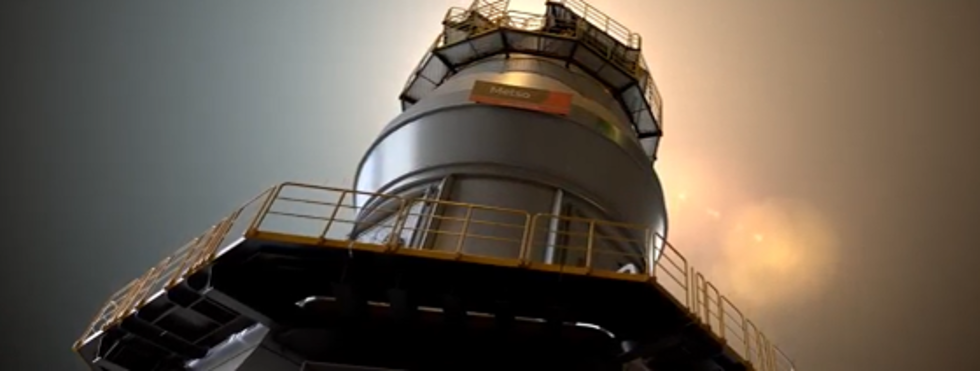
Example of a VRM pilot test unit where active trials are regularly taking place
Example of a VRM pilot test unit where active trials are regularly taking place.

Dry grinding with VRMs is still a novel concept in mining, particularly for large-scale, hard-rock mineral processing. Won't VRMs be a niche proposition for highly specific applications?  

One question we asked ourselves is whether it is truly conservatism or is it more related to the business case. Mining projects must consider the risks and mitigations when technologies are selected. The challenge always has been to find the solution that meets both the technical and commercial aspects of the project. Metso’s philosophy is focused on taking a holistic approach when offering comminution circuits, considering energy efficiency, availability, operational and total installed costs.  

Taking the HPGR as an example, it took many years for adoption and still today many studies confirm that the total installed costs may be higher than some traditional circuits. The slower adoption comes down to the cost and complexity of HPGR systems. We quickly realized that with the Metso Loesche VRM technology – we can address these issues by bringing a solution that offers energy efficiency with a compact footprint and a simplified circuit that is easy to operate, all at the right total cost.   

The industry feedback we have received after our recent launch is showing us that many of our assumptions are on the right track. VRM technology is rapidly becoming a superior option in the early stages of flowsheet selection over an HPGR dry grinding circuit.

Final thoughts

When we saw a technology that we truly believed in, we moved very quickly to work with Loesche on forming the partnership. As one of the leading suppliers of comminution equipment, we recognized this as a pivotal moment that will impact the industry.

The Metso Loesche VRM technology also pairs extremely well with many of our offerings, for example our flotation and separation technologies. VRM technology can significantly improve downstream recovery and this has all our teams very excited for the what the future will bring.

Mining
Your information is safe. Check our privacy notice for more details.
Thank you!
We will shortly contact you. You can send a new inquiry again after 15 minutes.