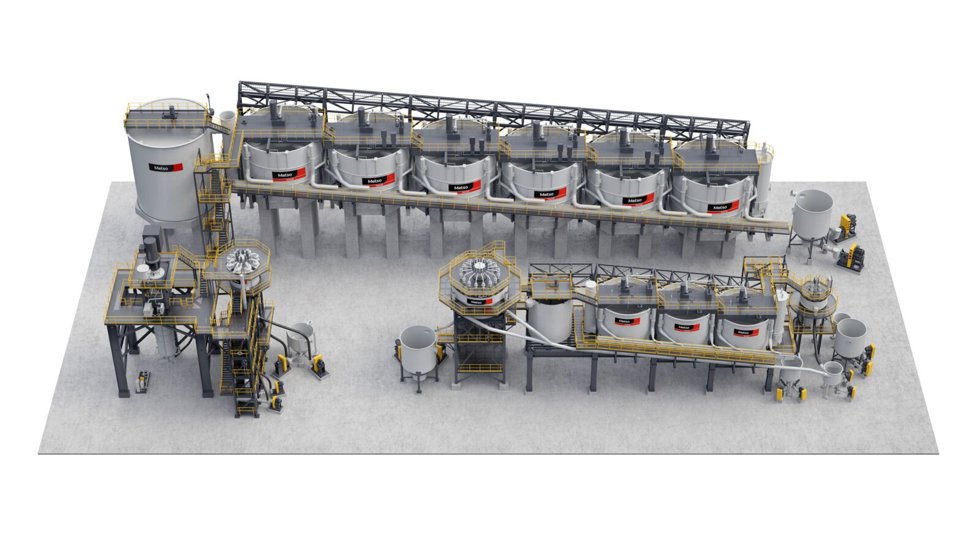
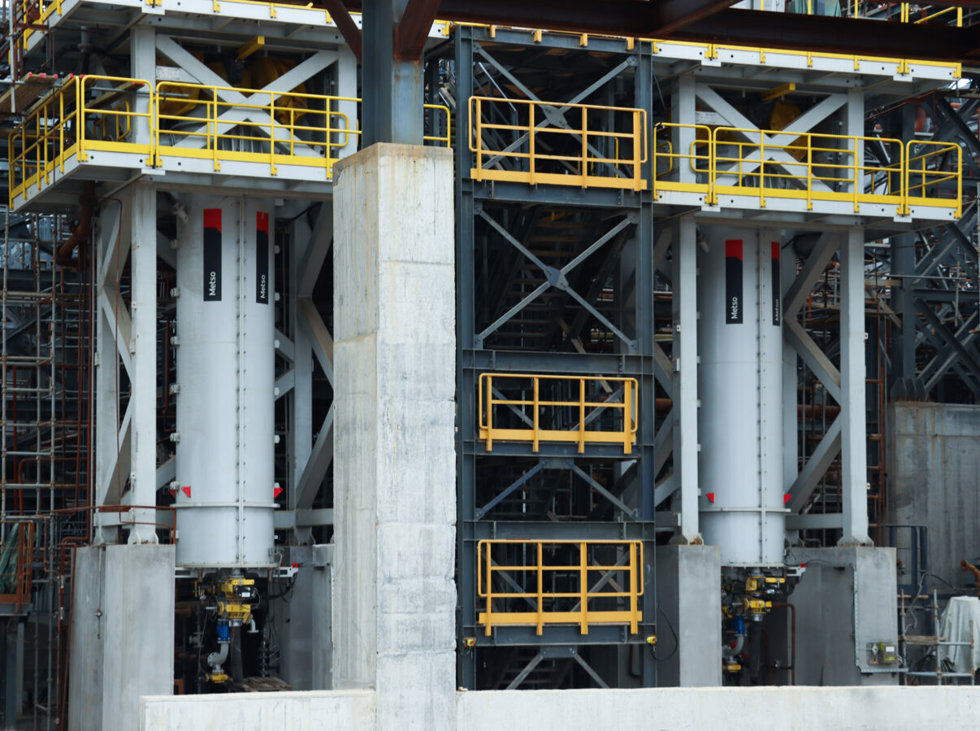
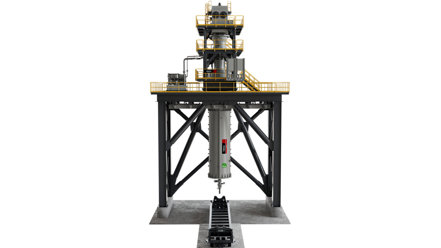
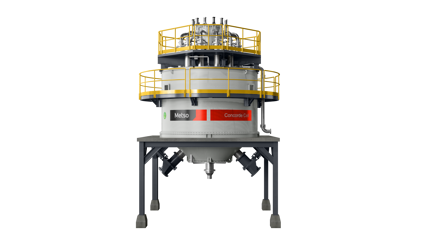
The synergy lies in process alignment. Instead of compensating for grinding limitations in flotation, or vice versa, the two technologies, which are both designated as Metso Plus offerings, are designed to complement each other, improving overall circuit efficiency and reducing the cost per recovered tonne while providing a more sustainable solution.
Finding the sweet spot
The combined solution is particularly effective in applications where fine mineral liberation is critical. Operations processing fine-grained sulphide ores, such as copper, zinc, or nickel, often benefit significantly from improved ultrafine grinding and enhanced fine particle recovery. Refractory gold operations, where ultra-fine liberation is essential to unlock value, are another strong candidate. Industrial minerals, where particle size needs to fit a tight range, could benefit from this solution as well. Across ore types, the Concorde Cell™ provides higher concentrate grades consistently, increasing rejection of impurities and optimizing both the logistics and sustainability of the circuit.
The combination also performs well in regrind circuits targeting higher concentrate grades or in brownfield operations where footprint constraints limit expansion options. Because both technologies are compact and energy-efficient, they offer advantages in space-constrained or energy-sensitive environments, but also for tailings reprocessing applications.
However, the solution is not universal. In ores that are already coarse liberated at primary grind sizes, additional ultrafine grinding may offer limited incremental benefit. Similarly, if recovery losses are primarily driven by water quality, reagent interactions, or upstream process variability, the root cause may lie elsewhere. A structured technical evaluation is therefore essential before implementation.
Evaluating suitability: A structured approach
Determining whether the HIGmill™ and Concorde™ combination is appropriate requires a data-driven assessment. Mineralogical analysis should confirm whether recovery losses are linked to incomplete liberation together with high losses in fine particles or another aspect of the process. Energy audits can reveal inefficiencies in existing regrind circuits, while flotation kinetics studies can highlight underperformance in the fine particle fraction. Tailings analysis often provides valuable insights into the quantity and characteristics of valuable minerals being lost.
Pilot testing or integrated test work can then quantify the potential uplift in recovery and energy efficiency. By evaluating grinding and flotation performance together rather than independently, operators can define recovery potential more accurately and make better-informed investment decisions. This integrated approach also supports reliable equipment sizing and selection, improving the overall plant layout and ensuring a fit-for-purpose process design.
Final considerations
As orebodies become more complex and sustainability expectations rise, incremental recovery improvements are no longer sufficient. Adding capacity or increasing energy consumption to chase marginal gains is becoming economically and environmentally unsustainable. The more effective strategy is to optimize the entire recovery chain, from liberation to separation.
Combining the HIGmill™ and Concorde Cell™ represents a shift from isolated equipment upgrades and new installations to integrated process engineering. By aligning ultrafine grinding efficiency with high-intensity flotation capability, operations can improve recovery while controlling energy intensity and footprint.
Ultimately, the key question is not whether to grind finer or float harder, but how to design a system in which both stages work in synergy. For operations facing fine particle recovery challenges, this integrated approach may provide the step-change improvement needed to unlock additional value, efficiently, sustainably and predictably.