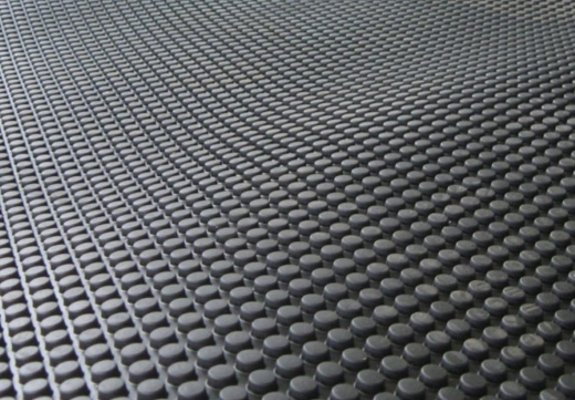
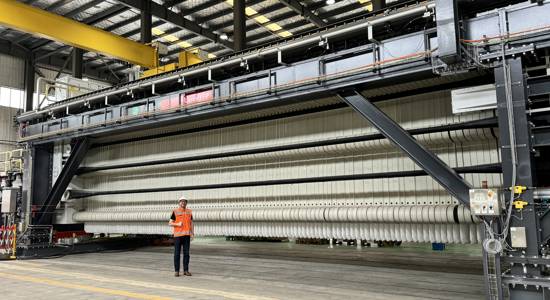
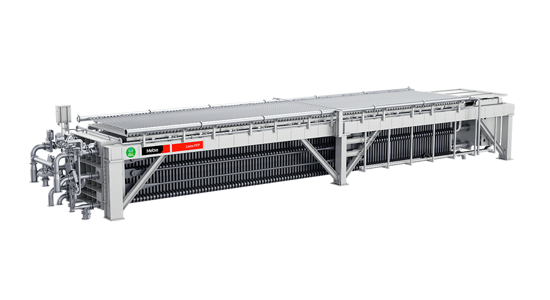
Filtration membranes are essential for transferring pressure to the slurry for effective dewatering, where water that is not adsorbed by solid particle surfaces is drained from the plate chamber.
Membranes are made from polymers that operate under constant strain due to the stretching and contraction after every filtration cycle and therefore require frequent replacements.
Membranes should adhere to strict quality controls in both dimensions and material structure, to ensure reliability which offers an optimal lifetime. Higher quality membranes also minimize unexpected membrane failures (such as leaks affecting cake moisture quality) and costly unplanned shutdowns for membrane replacements that impact production.
The frequency of replacement is dependent on process-specific conditions and will vary between various customer applications. It essential to inform customers to start collecting field data regarding membrane lifetime. The data collected can then be analyzed to assist our customers to find the best PM policy for membranes.
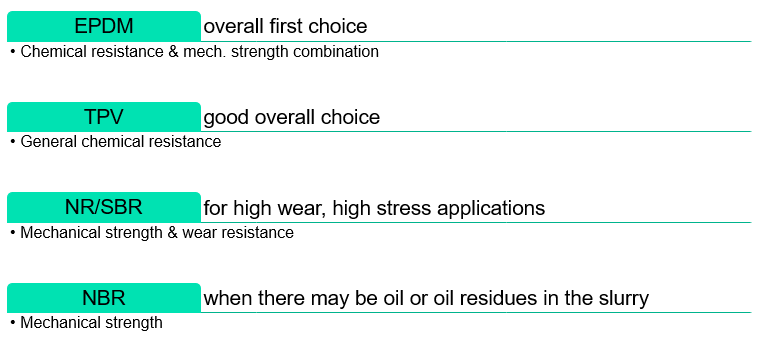
Material choices